Wondering how to become a pilot after 12th? The short version: clear a DGCA Class 2 medical, register on eGCA, join a DGCA compliant flying school, pass six exams, and log 200 flying hours for a Commercial Pilot Licence. Most cadets finish in 18 to 24 months. Here’s the full route, what it costs in 2026, and what you earn at the end.
Who is eligible for pilot training after 12th
The first thing to settle when you’re working out how to become a pilot after 12th is whether you qualify. The Directorate General of Civil Aviation (DGCA) sets the bar, and it’s lower than most families assume.
Requirement
What DGCA expects
Education
10+2 with Physics and Maths, any recognised board
Marks
Passed 12th, no percentage requirement
Minimum age
16 for SPL, 17 for PPL, 18 for CPL
Medical
Class 2 to begin, Class 1 before CPL
English
ELP Level 4 or higher
Documents
Valid passport and photo ID
No entrance exam stands between you and a flying school. There is no JEE, no NEET, no cut-off list.
If you took commerce or arts, you’re not out. Clear Physics and Maths through NIOS on-demand exams, which costs a few thousand rupees and adds three to six months. That’s the whole penalty. Once your licence is issued, no airline asks which stream you came from.
The rules are identical for women, and India has one of the highest shares of women airline pilots in the world. Nothing in the DGCA path changes based on gender.
How to become a pilot after 12th: the 7 steps
Follow these in the order DGCA expects, and the path stays cheap to correct.
Step 1: Book your Class 2 medical. A DGCA-empanelled doctor checks vision, hearing, ECG and general fitness. It costs a few thousand rupees and confirms you’re eligible before anyone spends lakhs.
Step 2: Get your DGCA computer number. Apply through the Pariksha portal and register on eGCA, where your exams, medicals and licence records live. Approval takes a few weeks.
Step 3: Choose a DGCA-approved FTO. Compare fleet size, instructor strength and how long current students actually take to finish 200 hours. Cheap hourly rates mean nothing if the aircraft sit idle. Structured flying training in India can close the flying phase in around 10 months.
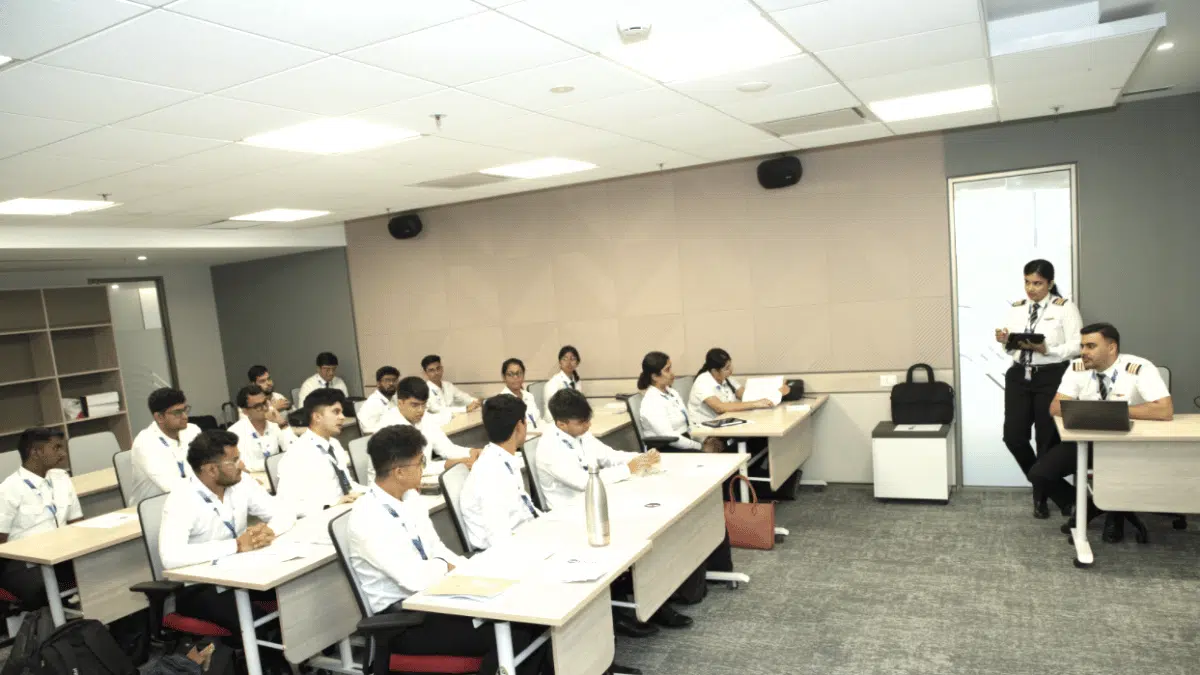
Step 4: Clear ground school. Six DGCA subjects: Air Navigation, Aviation Meteorology, Air Regulations, Technical General, Technical Specific, plus the RTR(A) radio telephony test, which DGCA itself has conducted since late 2025. Focused DGCA ground classes cut repeat attempts, and repeat attempts are what stretch timelines.
Step 5: Log 200 flying hours. Solo, cross-country, night and instrument flying, built up over 10 to 14 months. This is the heart of pilot training after 12th and the largest line in your budget.
Step 6: Upgrade to Class 1 and apply for your CPL. Submit through eGCA after your skill test with an approved examiner.
Step 7: Add a type rating and start applying. An A320 or B737 rating makes you hireable as a first officer. Some cadets instead build hours as flight instructors while airline intakes open.
How many years does it take, and what does it cost?
Two numbers decide most families’ answer on how to become a pilot after 12th: time and money.
Phase
Typical time
Typical cost (2026)
Class 2 and Class 1 medicals
1 – 2 months
₹25,000 – ₹50,000
Ground school and DGCA exams
4 – 8 months
₹1.5 – ₹3 lakh
Flying training, 200 hours
10 – 14 months
₹55 – ₹65 lakh
Licence issue via eGCA
1 – 3 months
Nominal fees
Type rating (A320 or B737)
2 – 3 months
₹15 – ₹19 lakh
So the honest answer on timing is 18 to 24 months from first medical to CPL in hand, and roughly two and a half years before you’re airline-ready with a type rating.
On money: pilot courses after 12th cost around ₹60 to ₹75 lakh all-in for the CPL, of which flying hours are close to nine-tenths. Add the type rating and the full journey to a cockpit lands near ₹75 to ₹95 lakh, spread across two years rather than paid upfront. Treat any school demanding the full amount on day one as a red flag.
Two routes after 12th: standard CPL or airline cadet programme
Standard CPL route
Airline cadet programme
Typical cost
₹75 – ₹95 lakh with type rating
Often ₹1 crore or above
Selection
Join any approved FTO
Airline screening before training
Job pathway
Apply to open first officer intakes
Defined pathway to that airline
Flexibility
Choose your school and pace
School and schedule prescribed
Best for
Cadets wanting a cost effective pathway
Families who value certainty
There are two ways to answer how to become a pilot after 12th, and neither is automatically better. A cadet seat buys a defined pathway; the standard route buys a lower bill and freedom to pick your school. Our breakdown of the IndiGo cadet pilot programme and Air India cadet pilot programme covers the selection stages if that route interests you.
Is it worth the investment?
Indian carriers have more than 1,500 aircraft on order between Air India and IndiGo, and every airframe needs crew. Hiring has stayed strong through 2026 as those deliveries land.
A first officer at a major Indian carrier typically starts around ₹1.5 to ₹2.5 lakh per month, and captains earn several times that. Most working pilots recover their training cost within four to six years. Our guide on pilot salary in India runs the airline-wise numbers.
The caveat is real: the maths only works if you finish. Budget shortfalls mid-course are the single most common reason cadets stall.
Frequently asked questions
How many years does it take to become a pilot after 12th? Around 18 to 24 months to hold a CPL, and roughly two and a half years to be airline-ready with a type rating. Ground school takes 4 to 8 months, the 200 flying hours take 10 to 14 months, and licence paperwork adds one to three months.
What should I study to become a pilot after 12th? Physics and Maths in Class 12 are the DGCA requirement. After that, ground school covers Air Navigation, Meteorology, Air Regulations and Technical subjects, plus the RTR(A) radio test. No degree is required, though some cadets add a distance degree alongside training.
Can I become a pilot after 12th with commerce or arts? Yes. Clear Physics and Maths through NIOS on-demand exams before starting CPL training. It costs a few thousand rupees and adds three to six months. Your eligibility then matches any science student’s, and airlines don’t distinguish between the two later.
How much do pilot courses after 12th cost in India? Plan for ₹60 to ₹75 lakh for the CPL, with the 200 flying hours accounting for ₹55 to ₹65 lakh of that. The type rating adds ₹15 to ₹20 lakh afterwards. Secured education loans from Indian banks cover most of this against collateral.
Is any entrance exam needed to become a pilot? No. JEE and NEET are irrelevant to the DGCA path. You need 10+2 with Physics and Maths, a Class 2 medical, a DGCA computer number, and admission to an approved flying school. Government academies like IGRUA run their own entrance test, but private FTOs admit on a rolling basis.
Final thoughts
Now you know how to become a pilot after 12th: medical, computer number, flying school, six exams, 200 hours, licence. The families who struggle aren’t the ones who lack talent. They’re the ones who planned around a brochure figure instead of the full one, or picked a school on price and lost a year to grounded aircraft.
Pilot course fees in India start at ₹55 to ₹65 lakh in 2026, and that figure covers only the 200 hours of flying training. Ground school, exams, living costs and the airline type rating sit on top, taking the full journey to roughly ₹75 to ₹95 lakh. Those numbers scare many families before anyone explains what they actually pay for. This guide breaks down the fees licence by licence, shows realistic timelines, compares your options, and walks you through funding the training without wrecking the household budget.
What a pilot course in India actually includes
When people say “pilot course”, they usually mean the path to a Commercial Pilot Licence (CPL) issued by the Directorate General of Civil Aviation (DGCA), India’s aviation regulator. The course has two halves, the Ground Theory and Flight Training.
The first half is ground school. You study six DGCA subjects, sit computer-based exams, and clear the RTR(A) radio telephony exam, which DGCA itself has conducted since late 2025. Structured DGCA ground classes compress this phase and cut repeat attempts, which quietly save money later.
The second half is flying. DGCA requires 200 hours of flight time for a CPL, logged at an approved Flying Training Organisation (FTO) in India or at a recognised school abroad followed by licence conversion. Flying hours are the single largest cost in the entire course, so the school you pick and how efficiently it flies you matters more than any brochure discount.
A third cost arrives after the licence: the type rating, which trains you on a specific airliner such as the A320 or B737. Airlines expect it, and it is almost never included in the quoted course fee.
If you are still mapping the whole journey, our guide on how to become a pilot in India covers eligibility and the route end to end.
Pilot course fees in India at a glance (2026)
Here is where pilot course fees in India stand for each licence stage in 2026. Treat these as realistic planning ranges, not quotes; fuel prices, aircraft type and location all shift the final bill.
Licence / stage
What it is
Typical fees (2026)
Typical duration
Student Pilot Licence (SPL)
Entry permit to begin training
₹50,000 – ₹1 lakh (often bundled into CPL)
2 – 4 weeks
Private Pilot Licence (PPL)
Fly privately, not for pay
₹15 – ₹20 lakh
6 – 9 months
Commercial Pilot Licence (CPL)
Fly commercially; the main course
₹60 – ₹75 lakh all-in (₹55 – ₹65 lakh of it is flying)
18 – 24 months
Type rating (A320/B737)
Airline aircraft qualification
₹15 – ₹20 lakh
2 – 3 months
ATPL (later, in service)
Captain-level licence
₹4 – ₹8 lakh (exams and upgrades)
After airline induction
Two things stand out. First, the CPL dominates the budget, and almost all of it is flying hours. Second, the ₹55 to ₹65 lakh figure you hear quoted is the flying training alone. Ground school, exams, living costs and the type rating are all additional, which is how the full journey reaches ₹75 to ₹95 lakh. Nobody pays it on day one; it spreads over roughly two years.
Pilot course fees in India after 12th: what school leavers should know
Most cadets start straight after Class 12, and the fee structure is identical whether you join at 17 or at 27. What changes is the preparation runway. You can hold a Student Pilot Licence at 17 and a CPL at 18, so a school leaver who plans well can be employable before classmates finish their first degree.
Your stream decides the entry paperwork. Science students with Physics and Maths walk straight in. Commerce and arts students clear those two subjects through NIOS on-demand exams first, which costs a few thousand rupees and adds three to six months. That is the entire penalty; airlines do not care which board or stream you came from once the licence is in hand.
One budgeting note specific to younger cadets: parents often compare pilot course fees in India against a four-year engineering degree plus placement uncertainty. The pilot route costs more upfront, but it compresses the earning timeline by two to three years, which changes the comparison once you run the numbers over a decade. Some families also pair the CPL with a distance degree as a fallback, adding ₹1 to 2 lakh over three years.
How long does a pilot course take?
Duration matters as much as pilot course fees in India, because every extra month adds hostel rent, food and lost earning time. A realistic timeline looks like this.
Phase
What happens
Typical time
Class 2 then Class 1 medical
DGCA medical assessments
1 – 2 months
Ground school + DGCA exams
Six subjects plus RTR(A)
4 – 8 months
Flying training (200 hours)
At an FTO in India or abroad
10 – 14 months
Licence issue via eGCA
Paperwork and verification
1 – 3 months
Type rating
Simulator-based airline course
2 – 3 months
Add it up and the honest answer is 18 to 24 months for most cadets, with disciplined students finishing closer to the lower end. The flying phase is where timelines slip badly at overbooked schools; aircraft availability, weather planning and instructor strength decide whether your 200 hours take ten months or twenty. A well-run commercial pilot training programme in India can complete the flying phase in around 10 months, which is one of the strongest arguments for choosing your FTO carefully rather than cheaply.
Students without Physics and Maths in Class 12 add a few months to clear these subjects through NIOS before starting, so factor that in if you are from a commerce or arts background.
CPL cost breakdown: where the money actually goes
The headline number becomes less frightening once you see the components. Here is a realistic breakdown of commercial pilot course fees in 2026.
Cost component
Typical range (2026)
Flying training, 200 hours
₹55 – ₹65 lakh
Ground school coaching
₹1.5 – ₹3 lakh
DGCA exam and eGCA fees
₹25,000 – ₹50,000 (across attempts)
RTR(A) exam and preparation
₹30,000 – ₹75,000
Class 1 and Class 2 medicals
₹25,000 – ₹50,000
Study material and equipment
₹50,000 – ₹1 lakh
Hostel and living, 18-24 months
₹3 – ₹5 lakh
CPL subtotal
₹60 – ₹75 lakh
Type rating (separate, later)
₹15 – ₹20 lakh
Full journey to an airline cockpit
₹75 – ₹95 lakh
Flying hours are close to nine tenths of the CPL bill, which is why per-hour rates deserve more attention than any other line in a school’s quotation. A school charging ₹500 less per hour saves you around ₹1 lakh across 200 hours, but only if its aircraft actually fly on schedule. An idle month at a cheap school costs more than the savings.
Exams are the opposite story. Each DGCA paper costs only a few thousand rupees through the eGCA portal, yet weak preparation multiplies attempts and stretches your timeline. This is the cheapest part of the course to get right the first time.
Government vs private flying schools: fees compared
Families often assume government institutes cut pilot course fees in India by half. The gap is smaller than you’d expect.
Factor
Government institutes
Private FTOs
CPL fees (all-in)
₹55 – ₹70 lakh
₹60 – ₹75 lakh
Entry
Entrance exam, limited seats
Rolling admissions
Waiting time
Long; batches fill fast
Usually shorter
Fleet and scheduling
Varies by institute
Varies widely; inspect before joining
Loan support
Strong, established tie-ups
Depends on the school
Government academies such as IGRUA publish all-in fee structures in the same territory as reputable private schools, and their entrance exams admit only a small batch each year. The real decision is not government versus private. It is a school that flies you consistently versus one that doesn’t, and that question is answered by fleet size, instructor count and current student load, not by ownership.
Cadet programmes vs the standard CPL route
Airline cadet programmes are the other fee structure you will encounter while researching pilot course fees in India. In a cadet programme, an airline such as IndiGo or Air India selects you before training begins, prescribes the flight school, and holds a conditional pathway to its own cockpit at the end.
The trade-off is straightforward. Cadet programmes typically cost more, often around ₹1 crore or above once the type rating and airline assessments are bundled in, against ₹75 to ₹95 lakh for the standard route of CPL plus type rating taken independently. What you buy for the difference is certainty: a defined airline pathway instead of applying to open first officer intakes after your licence.
Neither route is automatically better. A cadet seat suits families who can fund the higher figure and value the pathway; the standard route suits those who want a lower bill and are confident competing in open recruitment, which stays active while fleets grow. We have broken down the individual schemes in our guides to the IndiGo cadet pilot programme and the Air India cadet pilot programme, including their fee structures and selection stages.
Training in India vs abroad: what changes
Many Indian cadets complete their flying hours overseas and convert the licence to DGCA on return. The totals often land in the same range, but the structure differs.
Route
Typical all-in cost
Flying phase duration
Watch out for
India (DGCA direct)
₹60 – ₹75 lakh
16 – 18 months
School scheduling quality
USA (FAA, then convert)
₹65 – ₹70 lakh + conversion
12 – 14 months
Visa, exchange rate, conversion exams
New Zealand / South Africa
₹60 – ₹75 lakh + conversion
15 – 16 months
Conversion time back in India
Pilot course fees in India buy you a DGCA licence directly, with no conversion step at the end. Abroad, you often fly more consistently thanks to better weather windows and larger fleets, and the dollar rate decides whether the route saves anything. Conversion back to a DGCA licence adds exams and a few months. If that route interests you, see our detailed page on pilot training in the USA for how the numbers work out.
Hidden costs most students miss
Quotations rarely lie, but they often omit. Ask every school you shortlist about these items, because together they add ₹3 to ₹8 lakh to naive budgets:
Repeat flying hours beyond the 200-hour minimum, if check flights don’t go well
Landing, navigation and airport charges billed separately from the hourly rate
Uniform, headset, chart subscriptions and iPad or EFB apps
Medical renewals and travel to DGCA-empanelled doctors
Exam re-attempt fees and extra coaching if a subject needs a second run
Hostel deposits, mess charges and travel home during weather breaks
Licence conversion costs, if you train abroad
A 10 to 15 percent buffer over the quoted pilot course fees in India is not pessimism. It is standard financial planning, and schools respect students who ask these questions early.
How to plan and fund your pilot training: step by step
Here is the sequence we recommend to every cadet family before paying the first instalment.
Clear a DGCA Class 2 medical first. It costs a few thousand rupees and confirms you are medically eligible before any large payment. Upgrade to Class 1 soon after.
Build the full budget, not the brochure budget. CPL fees, type rating, living costs and the hidden items above, with a 10 to 15 percent buffer.
Get itemised quotations from at least three FTOs. Insist on per-hour rates, what the quote excludes, and the current average time students take to finish 200 hours.
Explore secured education loans early. Indian banks fund pilot training against collateral, and several offer aviation-specific products. Processing takes weeks, so start before admission season.
Hunt for scholarships and airline pathways. A handful of state schemes, women-in-aviation scholarships and airline cadet programmes offset costs. Cadet programmes cost more upfront but bundle an airline pathway.
Pay in milestones, never in bulk. Reputable schools accept stage-wise payments tied to flying hours completed. Treat any demand for the full amount upfront as a red flag.
Track everything on eGCA. Your exams, medicals and licence application all live on the portal. Staying current avoids expensive idle months at the end.
Is a pilot course worth the fees in 2026?
Are pilot course fees in India worth paying at all? The hiring data supports a straight yes for committed students. Indian carriers have more than 1,500 aircraft on order, led by Air India and IndiGo, and every new airframe needs crews. DGCA issued a record number of CPLs in 2023, around 1,600, and issuance has stayed strong since, per DGCA’s own data. Globally, Boeing’s Pilot and Technician Outlook projects a need for roughly 6.6 lakh new pilots worldwide over the next two decades, with India among the fastest-growing markets.
Set that against earnings. A first officer at a major Indian carrier typically starts around ₹1.5 to ₹2.5 lakh per month, and captains earn several times that. Our detailed guide on pilot salary in India runs the airline-wise numbers, but the short version is that a working pilot typically recovers the full training cost within the first four to six years of flying. Few careers with a two-year training runway offer that payback curve.
The honest caveat: the payback only works if you finish. Budget shortfalls mid-course are the most common reason students stall, which is why the planning steps above matter as much as choosing a school.
Frequently asked questions
How much are pilot course fees in India in 2026? Plan for ₹55 to ₹65 lakh for the 200 hours of flying training alone. Ground school, exams, medicals and living costs add roughly ₹5 to ₹10 lakh on top, and the airline type rating adds ₹15 to ₹20 lakh later, taking the total journey to roughly ₹75 to ₹95 lakh spread over about two years.
How long does a pilot course take in India? Typically 18 to 24 months from first medical to CPL in hand. Ground school and DGCA exams take 4 to 8 months, the 200-hour flying phase takes 10 to 14 months at a well-run school, and licence paperwork adds a month or two. The type rating is a further 2 to 3 months.
Are government flying schools cheaper than private ones? Not dramatically. Government institutes such as IGRUA publish all-in CPL fees in the ₹55 to ₹70 lakh range, similar to reputable private FTOs, and seats are limited by entrance exams. Compare schools on aircraft availability and completion timelines rather than ownership.
Does the pilot course fee include type rating? Almost never. Quoted CPL fees cover training up to the licence. The type rating on an A320 or B737 is a separate course costing ₹15 to ₹20 lakh, usually taken after CPL issue or through an airline cadet pathway that bundles it.
Can I get an education loan for pilot training in India? Yes. Most large Indian banks extend secured education loans for DGCA-approved training, typically against property or deposits, and some NBFCs offer aviation-specific products. Start the process two to three months before admission, and borrow against an itemised quotation rather than a lump-sum figure.
Can I do a pilot course after 12th without Physics and Maths? You can. Commerce and arts students clear Physics and Maths through NIOS on-demand exams before starting CPL training. It adds a few months and a small cost, after which eligibility matches any science student’s.
Final thoughts
Pilot course fees in India are a serious investment, but they are a knowable one. The ranges in this guide let you build an honest budget: ₹55 to ₹65 lakh for the flying training, ₹5 to ₹10 lakh for ground school, exams and living, ₹15 to ₹20 lakh for the type rating, a sensible buffer on top, and 18 to 24 months of committed effort. The families who struggle are almost always the ones who planned around a brochure number instead of a full one.
Air India Cadet Pilot Program 2026 explained: fees, eligibility, selection stages, and the timeline from application to type rating.
The Air India Cadet Pilot Program takes you from zero flying hours to the right-hand seat of an Air India aircraft in roughly 24 months. It’s also one of the biggest financial decisions you’ll ever make. This guide breaks down the 2026 fees, eligibility rules, selection stages, and the full training timeline. By the end, you’ll know whether the cadet route fits your plans, and exactly how to apply.
What is the Air India Cadet Pilot Program?
The Air India Cadet Pilot Program is an airline-run training pathway. Air India selects you first, then trains you to its own standard, and inducts you as a First Officer once you clear every stage. That order matters. In the conventional route, you pay for a Commercial Pilot Licence (CPL) on your own and only then compete for an airline job. Here, the airline has already picked you before your first flying lesson.
The program is designed for applicants with no prior flying experience. You complete DGCA theory in India, fly at Air India’s partner schools in India or in the United States, return for licence conversion, and finish with a type rating on an Airbus or Boeing aircraft. Air India lists the full pathway on its official cadet pilot portal.
Why is Air India training cadets at this scale? Fleet growth, mostly. The airline has publicly announced orders for around 570 new aircraft since 2023, one of the largest aircraft orders in aviation history. Every new aircraft needs crews. The Ministry of Civil Aviation has estimated that India will need around 30,000 new pilots over the next two decades as the fleet expands. Airline cadet programs exist to fill that pipeline in a controlled, predictable way.
If you’re still mapping out the broader career path before committing to any single airline, our step-by-step pilot career guide walks through every route from class 12 to the cockpit.
Air India Cadet Pilot Program eligibility in 2026
Air India keeps the entry gate fairly standard for an Indian cadet program. Here’s the eligibility matrix as published for current intakes.
Requirement
What Air India asks for
Age
18 to 30 years
Citizenship
Indian citizen or OCI holder
Education
10+2 with 60% overall, and 60% each in English, Maths, and Physics
Commerce/Arts students
Eligible after completing Maths and Physics through NIOS
Height
Minimum 158 cm
Medical
DGCA Class 1 medical clearance before flight training begins
English
Proficient written and spoken English
Flying experience
None required
A few of these deserve a closer look.
The 60% rule applies subject-wise, not just to your aggregate. Scoring 75% overall with 55% in Physics won’t clear the bar. If you took Commerce or Arts in class 12, you can add Maths and Physics through the National Institute of Open Schooling (NIOS), a route thousands of Indian cadets have used. Plan for six months to a year of extra time.
The DGCA Class 1 medical is the single most common tripping point. It’s a detailed cardiology, vision, hearing, and general fitness assessment conducted by DGCA-empanelled examiners. You can review the current medical requirements on the DGCA website. Our advice: get your Class 2 and Class 1 medicals done early, even before you apply. Discovering a disqualifying condition after paying training instalments is the worst-case scenario, and it’s avoidable.
One more detail applicants miss: you must have finished class 12 before applying. You can’t apply while your board exams are pending. If you’re rejected at any stage, Air India allows you to reapply after a three-month cooling-off period.
Air India Cadet Pilot Program fees: what to budget in 2026
Here’s the honest answer most websites bury: Air India does not publish a sticker price. The airline states that training costs are shared with candidates after selection, before training begins. The fee depends partly on which partner school you’re allotted, and it’s paid in instalments linked to training milestones rather than as one lump sum.
That said, you shouldn’t walk into selection blind. Based on what comparable airline cadet programs in India typically cost end-to-end, a sensible planning budget looks like this.
Component
Typical range (INR)
Notes
CPL flight training (US partner school)
₹50–65 lakh
Around 200 hours of flying plus FAA licences
DGCA ground school and exam fees
₹2.5–3 lakh
Theory prep in India before you fly out
Living costs in the US
₹8–15 lakh
Housing is arranged; food and personal costs vary
DGCA conversion on return
₹3–6 lakh
Conversion flying, checks, and paperwork
Type rating (A320 or B787/B777 family)
₹25–35 lakh
Conducted at Air India-affiliated training organisations
Rough total
₹90 lakh–1.2 crore
Hedge upward; currency swings affect US costs
Treat these as planning ranges, not Air India’s official quote. The airline’s own figure, shared at enrolment, is the only number that counts.
Accommodation, local transportation, and airfare may vary depending on the training partner and program you choose. Review the list of inclusions carefully and request a detailed cost breakdown before enrolling. It’s also a good idea to keep an additional 10–15% budget for exchange rate fluctuations and any unforeseen expenses, such as retests.
Training structure and timeline: the 24 months explained
Air India states the program runs approximately 24 months, including the type rating. Here’s how those months typically break down.
Phase
Where
Approximate duration
What happens
DGCA ground school and theory exams
India
4–6 months
You clear DGCA CPL theory papers and get your Computer Number
Flight training
AeroGuard (Phoenix, Arizona) or Acron Aviation Academy (Sanford, Florida) AIFA (Amravati, Maharashtra)
12–15 months
Around 200 hours of flying; you earn an FAA CPL with multi-engine and instrument ratings
Licence conversion
India
2-3 months
Your FAA licence converts to a DGCA CPL
Type rating and airline induction
Air India-affiliated ATOs, including Gurugram
3–4 months
Simulator training on your assigned fleet, then line training
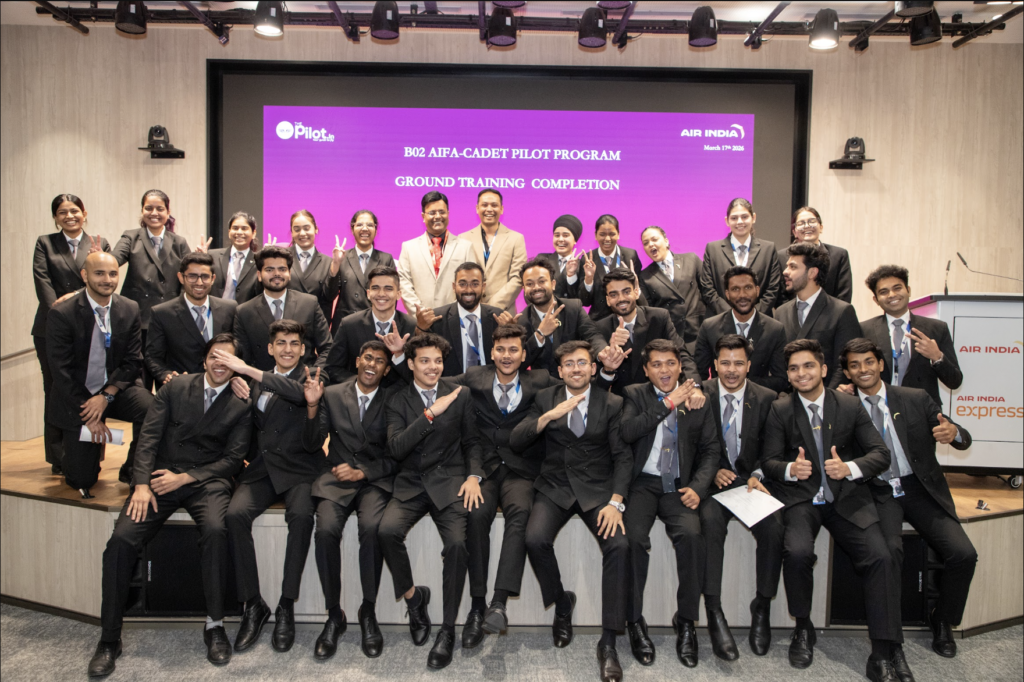
The India phase comes first, and it’s where preparation pays off. You’ll complete your DGCA ground school and appear for DGCA examinations in Air Navigation, Meteorology, Air Regulations, and Technical subjects. As the official ground training partner for the Air India Cadet Pilot Program, ThePilot.in conducts the DGCA ground classes at the Air India Academy in Gurugram, providing structured, instructor-led training aligned with the DGCA syllabus. Cadets who build a strong theoretical foundation early typically clear their papers more efficiently, helping them stay on track with their overall training timeline.
The US phase is the longest part of the program. Phoenix and Sanford were selected for their favourable flying weather, with Arizona offering more than 350 flyable days each year. Consistent flying conditions reduce weather-related interruptions, allowing students to progress through their flight training more efficiently than in regions where frequent weather delays can extend training timelines.
Training duration varies based on individual progress, aircraft availability, weather, and examination outcomes. Air India also presents the program timeline as an estimate rather than a fixed commitment. As a practical expectation, plan for approximately 24 months, while understanding that some students may take closer to 27 months to complete the entire program.
Where you’ll train: AIFA Amravati and the US partners
Air India is the first Indian airline to build its own flying school. The Air India Flying Academy (AIFA) at Belora airport in Amravati, Maharashtra sits on a 10-acre residential campus and is designed to graduate 180 commercial pilots every year, according to Air India’s official announcement. The academy has ordered 34 trainer aircraft, 31 single-engine and 3 twin-engine, and was slated to begin operations by early 2026 pending its DGCA licence.
What does that mean for you? In the near term, flight training for the Air India Cadet Pilot Program continues at the two US partner schools. As AIFA scales up, a growing share of cadets should train at Amravati itself, which would trim visa hassles and currency exposure from the equation. If you’re applying in 2026, ask at selection which school your batch would be allotted, and whether an India-based option is on the table for your intake.
Type ratings and advanced training happen at Air India-affiliated training organisations, including the airline’s simulator facilities in Gurugram, which are expanding alongside the fleet.
How to apply: the selection process step by step
Selection runs in four official stages. Here’s the full sequence as you’ll experience it.
Confirm your eligibility and gather documents. Class 10 and 12 marksheets, ID proof, and passport. Fix any subject-wise percentage gaps through NIOS before applying.
Apply online. Submit the application on Air India’s cadet pilot portal. There’s no walk-in route; everything starts here.
Clear the technical evaluation. A computer-based assessment covering numerical reasoning, critical thinking, spatial awareness, and hand-eye coordination through motor-skills tasks. Pilot aptitude tests of this style reward practice, so drill sample tests beforehand.
Clear the non-technical evaluation. Group exercises and a panel interview. Assessors watch how you communicate, handle pressure, and work in a crew. Rehearse structured answers about motivation and teamwork, but don’t script yourself into sounding robotic.
Accept your offer and enrolment terms. Successful candidates receive the program offer along with the fee structure and payment plan. Review the inclusions line by line before signing.
Complete your DGCA Class 1 medical and Computer Number. Both must be in place before training starts. Book the medical early; examiner slots in metro cities fill up weeks ahead.
Begin ground school. Your batch starts DGCA theory in India, and the 24-month clock starts running.
If you clear some stages but stumble at one, the three-month cooling-off rule lets you reapply. Many successful cadets across airline programs got in on the second attempt.
Air India cadet program vs conventional CPL: which route fits you?
The cadet route isn’t automatically better. It trades money for certainty. Here’s the comparison that actually matters when you’re choosing.
Factor
Air India cadet program
Conventional CPL route
Cost
Roughly ₹90 lakh–1.2 crore including type rating
₹55–75 lakh for CPL; type rating (₹25–35 lakh) usually only after selection
Airline link
Selected by Air India before training begins
You compete for airline slots after CPL
Selection risk
Front-loaded: tough entry, clearer path after
Back-loaded: easier entry, uncertain placement
Timeline to airline cockpit
Around 24 months
24–48 months, depending on hiring cycles
Flexibility
Committed to one airline’s pathway
Free to apply to IndiGo, Akasa, Spicejet or fly abroad
Who it suits
Candidates with financing sorted who want a defined path
Candidates optimising cost, or unsure which airline they want
The conventional route through a DGCA-approved flying school, such as our in-India CPL program, typically requires a lower upfront investment. The key difference is that you’ll complete your Commercial Pilot Licence first and then apply to airlines independently, rather than training through an airline-sponsored cadet pathway.
One important point to remember is that an airline-linked cadet program is not the same as an unconditional job guarantee. Progression through the program depends on successfully clearing every stage of training, including DGCA examinations, flight training, assessments, the type rating, and the airline’s evaluation requirements. As with any cadet program, meeting all prescribed standards is essential before joining the airline as a First Officer.
What happens after the program: induction and career path
Finish the type rating and you move into Air India’s induction pipeline as a trainee First Officer. That starts with airline-specific ground training, simulator checks on your assigned fleet, and then supervised line flying with training captains on scheduled routes. Only after your final line check do you fly as a regular First Officer.
Fleet assignment matters more than most cadets realise. Air India operates the Airbus A320 family on domestic and short-haul routes alongside Boeing wide-bodies on international sectors, and the group’s fleet plan is still absorbing that 570-aircraft order. Cadets are typically assigned where the airline needs crews, not where they’d prefer to fly. Go in flexible.
On pay, be careful with numbers you read online. First Officer salaries in India vary by airline, fleet, and flying hours, and they change with industry cycles. Entry-level First Officers at major Indian carriers typically earn in the low lakhs per month, with a sharp jump at command upgrade to Captain, which usually takes five years or more of line experience. Ask current line pilots or your counsellor for realistic current figures rather than trusting a three-year-old forum post.
The longer arc is the real payoff. A cadet who joins at 21 can realistically be a wide-body Captain in their thirties, and India’s pilot shortage means experienced crews will stay in demand for decades.
Frequently asked questions
Q: How much does the Air India Cadet Pilot Program cost? A: Air India shares the exact fee after selection, before training begins. Realistically, budget around ₹90 lakh to ₹1.2 crore end-to-end, covering CPL training in the US, living costs, DGCA conversion, and the type rating. Payments are made in instalments tied to training milestones, and Air India has loan tie-ups with financial institutions for selected cadets.
Q: What is the eligibility for the Air India Cadet Pilot Program? A: You need to be 18 to 30 years old, an Indian citizen or OCI holder, at least 158 cm tall, with 60% in 10+2 and 60% each in English, Maths, and Physics. You must clear a DGCA Class 1 medical before flying starts. No prior flying experience is needed, and Commerce or Arts students can qualify via NIOS.
Q: Does the Air India Cadet Pilot Program guarantee a job? A: Not unconditionally. The program is a defined pathway to a First Officer position at Air India, but induction depends on clearing every training phase, the type rating, and the airline’s assessments. It’s far stronger than finishing a standalone CPL and applying cold, yet no Indian airline issues an unconditional job guarantee at enrolment.
Q: How long does the Air India Cadet Pilot Program take? A: Around 24 months from ground school to type rating completion, per Air India’s official course details. That covers 4–6 months of DGCA theory in India, 12–15 months of flight training in the US, licence conversion on return, and the type rating. Individual timelines vary with exam attempts, weather, and aircraft availability.
Q: Can Commerce or Arts students join the Air India Cadet Pilot Program? A: Yes. If you didn’t take Maths and Physics in class 12, you can complete both subjects through the National Institute of Open Schooling (NIOS) and become eligible, provided you score 60% or above. This route typically adds six months to a year, so start the NIOS process as early as possible.
Final thoughts
The Air India Cadet Pilot Program is one of the most structured routes into an airline cockpit in India today: selection first, a defined 24-month pathway, and a type rating aligned to one of the fastest-growing fleets in the world. The catch is the price tag and the front-loaded selection. Walk in prepared or don’t walk in yet.
That preparation, the aptitude tests, the group exercises, the interview, the DGCA theory, is exactly where most applicants fall short, and exactly where coaching moves the needle. If Air India is your target for 2026, apply for cadet selection prep with our team and go into assessment day ready. Your guide to fly.
CPL training in India costs somewhere between ₹80 to 90 lakh, and most of the money students lose along the way has nothing to do with flying. It leaks out through planning mistakes: the wrong school, a skipped medical, a budget with no buffer. We’ve counselled thousands of cadets since 2019, and the same seven errors keep showing up. This post walks through each one, what it typically costs, and how to avoid it before you sign anything
Mistake 1: Choosing a flying school on the quoted fee alone
The lowest quote is almost never the lowest cost. A school quoting ₹35 lakh against a competitor’s ₹42 lakh has often left out DGCA exam fees, landing and parking charges, fuel surcharges, uniform and kit, re-test charges, and accommodation. Ask for a fully loaded, written estimate and the gap usually shrinks or reverses.
Fee is also the wrong first filter. What actually decides your cost is how fast you finish, and that depends on aircraft availability. A school with three ageing trainers and forty students on the roster will keep you waiting for slots. Every idle month at base adds rent, food, and revision decay while your budget burns with no hours logged.
Before you compare fees, compare these:
Fleet size and serviceability. How many aircraft, how old, and how many are typically flying versus grounded?
Student-to-aircraft ratio. Fewer students per aircraft means faster completion.
Average completion time. Not the brochure timeline. The actual average for the last two or three batches.
What the quote excludes. Get the exclusion list in writing.
One more trap inside the quote itself: some schools price as a package, others quote an hourly rate multiplied by 200 hours. The hourly model looks transparent but shifts all the risk to you. If you need 15 extra hours to reach test standard, and many students do, that’s another ₹1.5 to 2 lakh nobody mentioned. Ask what happens to the price if you exceed 200 hours, and whether check-ride failures trigger re-flight charges.
A DGCA cirriculum school with a slightly higher fee and a healthy fleet is usually the cheaper option over the full course. That maths is the core of how we vet partner schools for our in-India CPL program.
Mistake 2: Leaving the Class 1 medical for later
This one hurts the most because it’s the easiest to avoid. Your DGCA Class 1 medical is the gate to a commercial flying career, and a surprising number of students enrol, pay the first instalment, and only then discover a colour vision deficiency, an ECG finding, or an eyesight issue that needs correction or special evaluation.
The fix costs a few thousand rupees and a few weeks. Get your Class 2 medical from a DGCA-empanelled examiner first, then your initial Class 1 assessment at a DGCA-designated centre, before you commit serious money anywhere. Most findings are manageable with time, documentation, or treatment. What you want is to know about them before your fees are locked in, not after.
The common flags are worth knowing in advance. Colour vision deficiency is the big one, since it can restrict a commercial licence outright. Uncorrected eyesight beyond limits, high BMI, blood pressure, and minor ECG variations come up regularly too. None of these is automatically disqualifying, and the DGCA has review and special-evaluation routes for borderline cases. But every one of them is cheaper to discover at a medical centre than at a flying school after your first instalment.
If you’re still mapping the sequence of medicals, licences, and exams, our step-by-step guide on how to become a pilot lays out the full pathway from class 12 to the right-hand seat.
Mistake 3: Budgeting the brochure price, not the real price
Most students budget the tuition figure and stop there. The real cost of CPL training in India has more line items, and the gap between the brochure and reality is typically several lakh.
Component
Typical range (INR)
Often missing from quotes?
Tuition + ~200 hours flying
₹55–85 lakh
Quoted, but check inclusions
DGCA exam and licence fees
₹50,000–80,000
Usually excluded
Ground school / exam coaching
₹1.5–3 lakh
Usually excluded
Medicals (Class 2 + Class 1)
₹15,000-30,000
Almost always excluded
Accommodation and food
₹7–8 lakh
Almost always excluded
Re-tests, weather delays, buffer
10–15% of total
Never quoted
Type rating (after CPL)
₹15-19 lakh
Separate phase entirely
Two rules make this table survivable. First, build a 10 to 15 percent buffer into whatever number you land on, because weather, aircraft downtime, and exam re-attempts happen to good students too. Second, decide upfront how the type rating phase will be funded. It arrives 10 to 14 months after you start, which feels far away and isn’t.
Mistake 4: Treating DGCA theory as an afterthought
The DGCA CPL exams cover Air Navigation, Aviation Meteorology, Air Regulations, Technical General, and Technical Specific, plus the RTR(A) radio telephony licence. Since November 2025, the DGCA conducts the RTR(A) exam as well, so the whole theory stack now runs through your DGCA Computer Number.
The expensive version of this mistake looks like this: a student reaches the flying base, discovers papers are harder than expected, and spends four months paying rent and losing flying currency while grounded in a textbook. Theory delays are the quietest budget killer in Indian flight training because nothing looks wrong. You’re just not moving.
The cheap version is to start ground school early, ideally before or alongside your initial flying, and clear most papers in your first attempts. Structured prep matters here more than raw hours; the papers reward exam technique and question-bank practice as much as understanding. That’s exactly what our DGCA ground classes are built around, with full-time and part-time batches for students at different stages.
Sequencing helps too. Air Regulations and Aviation Meteorology are typically cleared first because they’re self-contained. Air Navigation and Technical General demand the longest runway, so start them earliest. Each paper result stays valid for a limited window, which means clearing everything years before you fly wastes validity, and clearing nothing before you fly wastes money. The sweet spot for most students is starting theory two to four months before flying begins.
Mistake 5: Picking India vs abroad without doing the conversion math
“Should I train in India or abroad?” is the most common question we get, and most students answer it on a single variable: either headline cost (India looks cheaper) or headline speed (abroad looks faster). Both answers are incomplete until you add conversion.
A foreign licence must be converted to a DGCA CPL when you return. That means DGCA theory papers, an Indian skill test, and some India-specific flying. Done well, conversion is a planned phase. Done as an afterthought, it adds months.
Factor
Training in India
Training abroad (USA / NZ / South Africa)
Typical duration
10–14 months
8–12 months + 2–4 months conversion
Typical cost
₹55–65 lakh
–
Weather / flying days
Monsoon can pause flying
Generally more consistent flying weather
DGCA papers
Done during training
Still required for conversion
Currency risk
None
Fee moves with the rupee
Supervision distance
Family nearby
You manage everything solo
Neither route wins by default. Pilot training in India suits students who want DGCA alignment from day one and lower headline outflow. Abroad suits students who want consistent weather and faster hour-building and can manage the conversion phase deliberately. Run both numbers end to end, including conversion, before choosing.
Mistake 6: Having no plan for the day after your CPL
A fresh CPL licence in India does not, by itself, get you an airline job. Airlines typically want a type rating on the aircraft they fly, and hiring runs in cycles that don’t care about your graduation date. Students who discover this in month twelve face an unfunded ₹18 to 25 lakh type rating decision at the exact moment their family’s budget is exhausted.
Plan the post-CPL phase before you start, not after. Broadly, you have two paths. The conventional route: finish your CPL, then self-fund a type rating and apply when airlines open windows. It’s cheaper upfront and flexible, but placement risk sits entirely with you. The cadet route: airline-aligned programs like the IndiGo Cadet Pilot Program or Air India Cadet Pilot Program cost more as a package but tie your training to an airline’s pipeline from the start, which is why competition for seats is intense.
Neither is universally better. What’s universally worse is not choosing, and letting the decision get made by whatever money is left in month fourteen.
Mistake 7: Trusting promises no one will put in writing
“100 percent placement.” “Guaranteed CPL in 8 months.” “Direct airline tie-up.” If a claim can’t go into your written agreement, treat it as decoration.
Three checks protect you. Ask for batch data in writing: how many students enrolled in the last two batches, how many finished, and in how many months. Talk to two or three recent graduates directly, not the ones the school selects for you. And verify the school’s approval status on the DGCA website yourself rather than taking a certificate on the wall at face value.
Honest schools survive these questions comfortably. The ones that get vague, defensive, or suddenly generous with discounts when you ask are telling you something more useful than any brochure. Keep every email and quote you receive during this phase. If a dispute comes up in month eight, the paper trail you built in week one is what protects you.
How to plan your CPL in six steps
The mistakes above reverse into a plan. Here’s the sequence we recommend to every student who walks in:
Clear your medicals first. Class 2 with a DGCA-empanelled examiner, then the initial Class 1 assessment, before any large payment.
Build a fully loaded budget. Use the table above, add every excluded item, then add a 10–15% buffer on top.
Choose your route on paper. India vs abroad, conventional vs cadet. Write down the total cost and timeline of each, including conversion and type rating.
Shortlist and vet 3–4 schools. Ask about fleet serviceability, student-to-aircraft ratio, and actual average completion time for recent batches. Get exclusions in writing.
Schedule theory early. Apply for your DGCA Computer Number, start ground classes before or alongside flying, and target first-attempt passes.
Fund the post-CPL phase upfront. Decide now how the type rating or cadet program will be paid for, so month fourteen has no surprises.
Six steps, maybe six weeks of work. Against a ₹80-90 Lakh decision, it’s the best-paying homework you’ll ever do.
Frequently asked questions
Q: How much does CPL training cost in India? A: CPL training cost in India typically runs ₹55 to 65 lakh end to end, covering tuition, around 200 flying hours, ground school, DGCA exam fees, medicals, and accommodation. Quotes far below this usually exclude several of those items. Budget a 10 to 15 percent buffer on top, and remember the type rating after your CPL is a separate ₹15 to 19 lakh phase.
Q: How long does CPL training take in India? A: The typical CPL course duration in India is 10 to 14 months at a DGCA-approved flying school. The spread depends on aircraft availability, monsoon interruptions at your base, and how quickly you clear DGCA theory papers. Schools promising sub-10-month completions are quoting best-case scenarios, so ask for the actual average of their last two batches instead.
Q: Can I start CPL training without a Class 1 medical? A: Technically you can begin flying on a Class 2 medical, but it’s a costly gamble. Your commercial licence requires a Class 1, and discovering a medical complication after paying fees can strand lakhs of rupees. Complete your Class 2 and your initial Class 1 assessment at a DGCA-designated centre before committing money to any school.
Q: Is it cheaper to do pilot training in India or abroad? A: On headline fees, pilot training in India usually costs less, at roughly ₹55 to 65 lakh against ₹60 to 85 lakh abroad once you include DGCA conversion. But totals converge case by case. Abroad often means faster hour-building and consistent weather, while India means no conversion phase and no currency risk. Compare full end-to-end numbers, not brochure prices.
Q: Which is better, a cadet program or a regular CPL course? A: There’s no default winner. A conventional CPL costs less upfront and keeps you flexible, but you carry the placement risk and fund your own type rating. A cadet program costs more as a package and has intense selection competition, but ties your training to an airline pipeline from day one. Decide based on your budget, risk appetite, and selection readiness before training starts.
Q: What is the biggest mistake student pilots make? A: Choosing a flying school on the quoted fee alone. The quote hides exclusions, and a low fee at a school with poor aircraft availability costs more overall because your training stretches by months. Vet fleet serviceability, student-to-aircraft ratio, and real batch completion times before comparing prices. The second biggest: delaying the Class 1 medical until after enrolling.
Final thoughts
None of these seven mistakes comes from carelessness. They come from making a ₹90 lakh decision in an industry you’re seeing for the first time, against sales teams who see it every day. A few weeks of deliberate planning, medicals first, budget fully loaded, route chosen on paper, closes most of that gap before you spend a rupee.
If you’d rather pressure-test your plan with someone who’s guided hundreds of cadets through it, book a free counseling call with our team. Twenty minutes, no obligation, and you’ll walk away knowing exactly which of these seven mistakes your current plan is closest to making. Your guide to fly.
DGCA CPL syllabus explained subject wise — every paper, topic, marks split and passing criteria for Indian CPL aspirants. Plan your exam prep the smart way.
The DGCA CPL syllabus subject wise comes in six papers, each tested separately at a 70% bar, and each with its own way of catching cadets out. This guide breaks the full DGCA exam syllabus down paper by paper: what’s in it, how it’s tested, which topics carry the most weight, and where most students lose marks. By the end, you’ll know which DGCA CPL ground subjects to clear first and how to plan your prep around the Pariksha calendar.
DGCA CPL syllabus: a subject-wise overview
Before we get into each paper individually, here’s the full picture.The DGCA Commercial Pilot Licence theory exam covers five core papers taken through the Pariksha portal, plus the RTR(A) radio telephony paper, which since November 2025 also sits under DGCA. You need 70% in every paper to pass, with no overall aggregate, so a high mark in one paper can’t carry a fail in another.
Each paper is independent. You can attempt one paper or all five in a single quarterly sitting, and once you clear a subject, the result is valid for five years. The DGCA Pariksha calendar runs every month now, divided between On-Demand and Regular Attempt.
Decoding skill (METAR, TAF) plus systems understanding
Air Regulations
~100 MCQs
~90 mins
Memorisation of rules, Annexes, and Acts
Technical General
~100 MCQs
~3 hours
Aircraft systems knowledge, instruments, engines
Technical Specific
~50–100 MCQs
~90 mins
POH-level knowledge of your trainer aircraft
RTR(A)
Practical + written
~30 mins
Radio phraseology and live communication
The order in which you take them is your choice, but it shouldn’t be random. Some papers reward memorisation and can be cleared in a few weeks of focused prep; others, especially Navigation and Meteorology, need ongoing practice that takes months to build.
Air Navigation : what’s in the syllabus
Navigation is the most calculation-heavy paper in the DGCA CPL syllabus subject wise breakdown. Roughly 25–30% of questions involve numerical work, and there’s no way to bluff your way through chart problems with surface-level reading.
The syllabus covers:
Earth and the atmosphere: Earth magnetism, latitude and longitude interpretation, solar time and UTC/LMT conversions, great circle and rhumb lines.
Chart projections: Lambert’s conformal conic and Mercator projections, scale, departure, D.Long, and convergency calculations.
Dead reckoning and the wind triangle: wind correction angle, ground speed, true airspeed conversions, ETA calculations.
Radio navigation aids: VOR, NDB, ILS, DME, ADF principles and limitations.
Satellite navigation: GNSS, GPS, and RNAV concepts.
Flight planning: fuel calculations, alternate planning, Equal Time Point (ETP) and Point of No Return (PNR) numericals.
You’ll use the CRP-5 navigation computer through most of the paper. Practising the wind triangle and time-distance-fuel problems on it daily is the single biggest pass-rate lever for this subject. Cadets who only memorise formulas without learning to operate the CRP-5 under time pressure tend to run out of time in the actual exam.
A practical study tip: start chart plotting from week three of your ground school, not week twelve. The chart muscle takes time to build, and there’s no shortcut.
Aviation Meteorology: what’s in the syllabus
Meteorology is half theory and half decoding skill. The textbook material covers everything from atmospheric structure to monsoon dynamics, but the actual paper is dominated by questions that ask you to read a METAR or TAF, interpret a weather chart, or predict conditions based on a frontal description.
The syllabus covers:
Atmospheric structure: layers of the atmosphere, ISA (International Standard Atmosphere), pressure and altimetry, temperature variations with altitude.
Clouds and precipitation: cloud formation, cloud types and their flight implications, fog formation, rain, hail, drizzle.
Pressure systems and fronts: high and low pressure, troughs and ridges, warm fronts, cold fronts, occluded fronts, stationary fronts, and the weather sequence associated with each.
Indian monsoon patterns: southwest and northeast monsoon, pre-monsoon and post-monsoon systems, regional weather peculiarities you’ll encounter on your training routes.
The decoding questions are where most cadets pick up easy marks if they’ve practised, or lose them if they haven’t. Set aside 30 minutes a day for METAR and TAF decoding from week one of your prep, using real Indian aerodrome reports (VABB, VIDP, VOMM, VOBL). By exam day, you should be able to parse a METAR string in under 30 seconds.
Air Regulations: what’s in the syllabus
Air Regulations is the most memorisation-heavy paper in the DGCA CPL exam pattern. It’s also the one cadets most often underestimate. The textbook is dense, the topics overlap, and the actual paper tests obscure clauses that surface-level revision will miss.
The syllabus covers:
Chicago Convention and ICAO framework: what ICAO does, the 19 Annexes it maintains, and how India implements them through DGCA.
Key ICAO Annexes: at least 12 of the 19 Annexes appear in the CPL syllabus, with Annexes 1 (Personnel Licensing), 2 (Rules of the Air), 6 (Operation of Aircraft), and 11 (Air Traffic Services) carrying the highest exam weight (source: industry CPL prep guides).
Indian aviation legislation: the Aircraft Act 1934, Aircraft Rules 1937, and the newer Bhartiya Vayuyan Adhiniyam 2024 which replaces older provisions.
Operational rules: personnel licensing, rules of the air, ATC procedures, search and rescue, aerodrome standards.
Annexes 12, 14, 17, 18: search and rescue, aerodromes, security, and the carriage of dangerous goods.
A useful free starting point is our Air Regulations practice quiz, which mirrors the kind of cross-referenced questions the actual paper asks. Cadets who score well on Air Regulations almost always treat it as a reading subject for two months before they touch a question bank, then drill MCQs for the last six weeks.
Technical General: what’s in the syllabus
Technical General tests your understanding of aircraft systems, instruments, and propulsion at the depth a First Officer is expected to know. The prep material is heavy on diagrams, even though the actual exam is text-only MCQs, so visualisation matters.
The syllabus covers:
Aerodynamics: forces acting on an aircraft, lift and drag generation, stability and control, stall and spin recovery principles, high-speed flight basics.
Aircraft structures: fuselage, wings, control surfaces, materials, stress and load factors.
The trap with Technical General is that the syllabus reads like a textbook overview, so cadets revise broadly and don’t drill specifics. The exam, by contrast, tests specific values, failure modes, and limitations. Build a personal cheat sheet of the numbers (red-line speeds, system pressures, electrical voltages) and revisit it daily in the final month before your sitting.
Technical Specific: what’s in the syllabus
Technical Specific is the one paper in the DGCA CPL syllabus subject wise list that varies by cadet. It tests detailed knowledge of the aircraft type you trained on, usually a Cessna 152 or 172, a Diamond DA40, or a Piper Seneca or DA42 if you went multi-engine.
The syllabus, derived from the Pilot’s Operating Handbook (POH) of your trainer aircraft, covers:
Limitations: weight, balance, manoeuvring, and operational limits.
The best preparation is the POH itself, read cover to cover at least three times during your ground school. Don’t rely on summary notes for this paper. Examiners often pull questions from sections (servicing intervals, exact fuel capacities) that summary guides skip. If you trained on a multi-engine aircraft, your paper will include additional content on asymmetric flight and engine-out procedures.
RTR(A): the sixth paper now under DGCA
The Radio Telephony Restricted Aeronautical licence, RTR(A), was administered by the Wireless Planning and Coordination Wing under the Department of Telecommunications for decades. Since November 2025, it now sits under DGCA along with the other CPL papers, which means you register for it through the same Computer Number and follow the same Pariksha workflow.
The RTR(A) syllabus and exam structure cover:
Written test: radio regulations, radio principles (transmission, reception, propagation), VHF operating procedures, and radio telephony rules.
Practical exam: from January 2026, the practical uses scenario-based simulated flight communication, where you’re given a flight scenario and expected to handle the radio work end-to-end: ATC calls, position reports, emergency calls, weather queries.
Phraseology: standard ICAO phraseology, callsign rules, distress and urgency signals, readback requirements.
The practical is the part most cadets stumble on, not because the material is hard, but because they haven’t rehearsed live radio work under pressure. Pair up with another cadet and run mock RT sessions twice a week from your ground school’s mid-point. Treat it like a language paper. Fluency only comes with speaking, not with reading.
Subject-wise difficulty: which DGCA CPL papers to clear first
Not every paper deserves equal study time, and the order you attempt them changes how quickly you finish. Here’s a rough difficulty mapping based on what cadets and DGCA coaching institutes consistently report.
Paper
Difficulty
Best time to attempt
Why
Air Regulations
Medium (memorisation)
First sitting
Builds confidence; rewards focused reading
Technical General
Medium (broad recall)
First sitting
Sits well with Air Regs prep style
Technical Specific
Easy to Medium
Soon after flight training
POH knowledge is freshest then
Aviation Meteorology
Hard (decoding + theory)
Second sitting
Needs daily decoding practice to build speed
Air Navigation
Hardest (calculations)
Second or third sitting
CRP-5 fluency takes 8–12 weeks to build
RTR(A)
Medium (practical-heavy)
Anytime; bundle with above
Practical needs live RT rehearsal
A common strategy: clear Air Regulations and Technical General in your first quarterly sitting, take Technical Specific while your trainer aircraft is fresh in your head, then put Navigation and Meteorology in a later sitting after you’ve had two to three months of focused calculation and decoding practice.
The five-year validity window means there’s no rush to bunch everything into one quarter. Cadets who split their attempts strategically often clear all six papers faster than those who try to clear everything in one go and end up re-sitting two.
Step-by-step subject-wise study plan
Here’s how to structure a four-to-six-month prep cycle across the DGCA CPL subjects:
Weeks 1–2: Foundation. Read the Air Regulations text cover to cover. Set up your CRP-5 and start basic navigation problems (latitude/longitude, time conversions). Start daily METAR decoding (10 reports a day from Indian aerodromes).
Weeks 3–6: Build the technical base. Move into Technical General, focusing one week each on aerodynamics, engines, electrical, and instruments. Continue Navigation chart work in parallel. Add fronts and weather charts to Meteorology study.
Weeks 7–10: Subject specifics. Read your trainer aircraft’s POH twice. Start Air Regulations MCQ drilling. Tackle wind triangle and ETP/PNR calculations in Navigation.
Weeks 11–14: Mock test phase. Do one full mock test per subject per week. Identify weak areas. For each wrong answer, write the correct answer plus a one-line explanation in a revision notebook.
Weeks 15–18: RTR(A) and final polish. Start RT mock sessions twice a week. Bunch Air Regulations and Technical General into your first Pariksha sitting.
Post first sitting: Second-round prep. Use the next two months to push Navigation and Meteorology preparation deeper before your second sitting. Practise RTR phraseology daily until your practical date.
Adjust the schedule if you’re juggling flight training abroad or working full-time. The principle stays the same: front-load reading subjects, build the calculation-heavy subjects slowly, and keep mock testing weekly from the midpoint onwards.
Frequently asked questions
Q: How many subjects are in the DGCA CPL syllabus? A: The DGCA CPL syllabus subject wise covers five core papers (Air Navigation, Aviation Meteorology, Air Regulations, Technical General, and Technical Specific) plus the RTR(A) radio telephony paper, which has been under DGCA since November 2025. Each is examined and passed independently at a 70% mark, with no overall aggregate.
Q: Which DGCA CPL subject is the hardest? A: Air Navigation is widely considered the hardest because of its calculation load, with roughly 25 to 30 percent of questions involving numerical work on the CRP-5 flight computer. Aviation Meteorology comes a close second due to its weather chart and METAR/TAF decoding demands. Most cadets clear Air Regulations and Technical General first to build momentum before tackling Navigation.
Q: How long does it take to study the full DGCA CPL syllabus? A: Most cadets cover the full DGCA CPL syllabus in four to six months of focused ground school, with an additional 3 to 5 hours of personal study per day. Fast-track options can compress this to three months, but they only work for cadets with a strong science background. Plan around the quarterly Pariksha calendar rather than a fixed end-date.
Q: Is the RTR(A) paper still separate from DGCA exams? A: No. Since November 2025, RTR(A) has been under DGCA along with the other CPL papers. You register for it through the same Computer Number and Pariksha portal workflow. It still has its own written and practical components, but the regulator is now DGCA, not the WPC.
Q: How are DGCA CPL papers marked? A: Each paper is multiple-choice with 50 to 100 questions depending on the subject, marked at a 70% pass. There is no negative marking, so always attempt every question. Marks aren’t published nationally, so any coaching institute claiming a specific pass-rate percentage should be asked for batch-level evidence before you enrol.
Q: Can I take the DGCA CPL syllabus subjects in any order? A: Yes. You can choose which papers to attempt in each quarterly Pariksha sitting and in what order. A common sequence is Air Regulations and Technical General first, then Technical Specific while your trainer aircraft is fresh, then Aviation Meteorology and Air Navigation after building decoding and calculation speed. Once you clear a paper, the result stays valid for five years.
Final thoughts
The DGCA CPL syllabus subject wise looks intimidating until you break it into pieces. Then it becomes a study plan you can actually execute. Treat Air Regulations and Technical General as reading subjects, Navigation and Meteorology as skills you build over months, Technical Specific as a POH reading exercise, and RTR(A) as a spoken-language paper that needs live rehearsal. Plan around the Pariksha calendar, not around a fixed graduation date.
If you’d like a clearer picture of how to time your sittings around your flight training schedule, book a free counseling call with our team. We’ll walk you through our DGCA ground classes structure and map a subject-wise plan that fits where you are right now.
Your Complete Pilot Career Starts Here
Everything you need to become a commercial pilot: from DGCA Ground Classes and flight training to airline cadet programs, type rating, career guidance, and expert counselling.