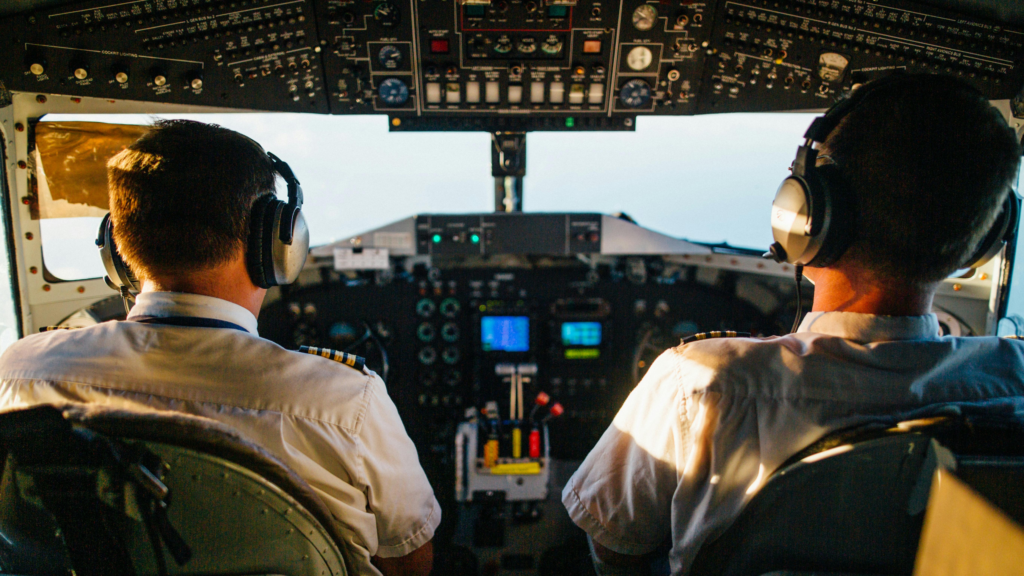
Wondering how to become a pilot after 12th? The short version: clear a DGCA Class 2 medical, register on eGCA, join a DGCA compliant flying school, pass six exams, and log 200 flying hours for a Commercial Pilot Licence. Most cadets finish in 18 to 24 months. Here’s the full route, what it costs in 2026, and what you earn at the end.
Who is eligible for pilot training after 12th
The first thing to settle when you’re working out how to become a pilot after 12th is whether you qualify. The Directorate General of Civil Aviation (DGCA) sets the bar, and it’s lower than most families assume.
| Requirement | What DGCA expects |
|---|---|
| Education | 10+2 with Physics and Maths, any recognised board |
| Marks | Passed 12th, no percentage requirement |
| Minimum age | 16 for SPL, 17 for PPL, 18 for CPL |
| Medical | Class 2 to begin, Class 1 before CPL |
| English | ELP Level 4 or higher |
| Documents | Valid passport and photo ID |
No entrance exam stands between you and a flying school. There is no JEE, no NEET, no cut-off list.
If you took commerce or arts, you’re not out. Clear Physics and Maths through NIOS on-demand exams, which costs a few thousand rupees and adds three to six months. That’s the whole penalty. Once your licence is issued, no airline asks which stream you came from.
The rules are identical for women, and India has one of the highest shares of women airline pilots in the world. Nothing in the DGCA path changes based on gender.
How to become a pilot after 12th: the 7 steps
Follow these in the order DGCA expects, and the path stays cheap to correct.
Step 1: Book your Class 2 medical. A DGCA-empanelled doctor checks vision, hearing, ECG and general fitness. It costs a few thousand rupees and confirms you’re eligible before anyone spends lakhs.
Step 2: Get your DGCA computer number. Apply through the Pariksha portal and register on eGCA, where your exams, medicals and licence records live. Approval takes a few weeks.
Step 3: Choose a DGCA-approved FTO. Compare fleet size, instructor strength and how long current students actually take to finish 200 hours. Cheap hourly rates mean nothing if the aircraft sit idle. Structured flying training in India can close the flying phase in around 10 months.
Step 4: Clear ground school. Six DGCA subjects: Air Navigation, Aviation Meteorology, Air Regulations, Technical General, Technical Specific, plus the RTR(A) radio telephony test, which DGCA itself has conducted since late 2025. Focused DGCA ground classes cut repeat attempts, and repeat attempts are what stretch timelines.
Step 5: Log 200 flying hours. Solo, cross-country, night and instrument flying, built up over 10 to 14 months. This is the heart of pilot training after 12th and the largest line in your budget.
Step 6: Upgrade to Class 1 and apply for your CPL. Submit through eGCA after your skill test with an approved examiner.
Step 7: Add a type rating and start applying. An A320 or B737 rating makes you hireable as a first officer. Some cadets instead build hours as flight instructors while airline intakes open.
How many years does it take, and what does it cost?
Two numbers decide most families’ answer on how to become a pilot after 12th: time and money.
| Phase | Typical time | Typical cost (2026) |
|---|---|---|
| Class 2 and Class 1 medicals | 1 – 2 months | ₹25,000 – ₹50,000 |
| Ground school and DGCA exams | 4 – 8 months | ₹1.5 – ₹3 lakh |
| Flying training, 200 hours | 10 – 14 months | ₹55 – ₹65 lakh |
| Licence issue via eGCA | 1 – 3 months | Nominal fees |
| Type rating (A320 or B737) | 2 – 3 months | ₹15 – ₹19 lakh |
So the honest answer on timing is 18 to 24 months from first medical to CPL in hand, and roughly two and a half years before you’re airline-ready with a type rating.
On money: pilot courses after 12th cost around ₹60 to ₹75 lakh all-in for the CPL, of which flying hours are close to nine-tenths. Add the type rating and the full journey to a cockpit lands near ₹75 to ₹95 lakh, spread across two years rather than paid upfront. Treat any school demanding the full amount on day one as a red flag.
Two routes after 12th: standard CPL or airline cadet programme
| Standard CPL route | Airline cadet programme | |
|---|---|---|
| Typical cost | ₹75 – ₹95 lakh with type rating | Often ₹1 crore or above |
| Selection | Join any approved FTO | Airline screening before training |
| Job pathway | Apply to open first officer intakes | Defined pathway to that airline |
| Flexibility | Choose your school and pace | School and schedule prescribed |
| Best for | Cadets wanting a cost effective pathway | Families who value certainty |
There are two ways to answer how to become a pilot after 12th, and neither is automatically better. A cadet seat buys a defined pathway; the standard route buys a lower bill and freedom to pick your school. Our breakdown of the IndiGo cadet pilot programme and Air India cadet pilot programme covers the selection stages if that route interests you.
Is it worth the investment?
Indian carriers have more than 1,500 aircraft on order between Air India and IndiGo, and every airframe needs crew. Hiring has stayed strong through 2026 as those deliveries land.
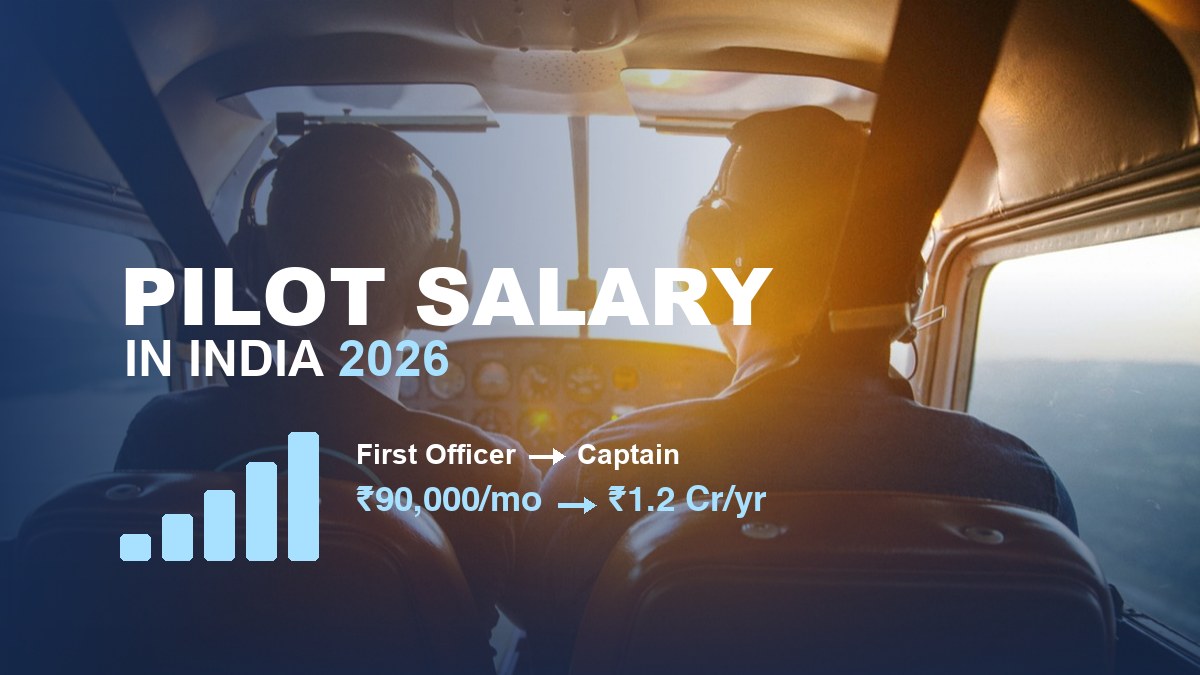
A first officer at a major Indian carrier typically starts around ₹1.5 to ₹2.5 lakh per month, and captains earn several times that. Most working pilots recover their training cost within four to six years. Our guide on pilot salary in India runs the airline-wise numbers.
The caveat is real: the maths only works if you finish. Budget shortfalls mid-course are the single most common reason cadets stall.
Frequently asked questions
How many years does it take to become a pilot after 12th? Around 18 to 24 months to hold a CPL, and roughly two and a half years to be airline-ready with a type rating. Ground school takes 4 to 8 months, the 200 flying hours take 10 to 14 months, and licence paperwork adds one to three months.
What should I study to become a pilot after 12th? Physics and Maths in Class 12 are the DGCA requirement. After that, ground school covers Air Navigation, Meteorology, Air Regulations and Technical subjects, plus the RTR(A) radio test. No degree is required, though some cadets add a distance degree alongside training.
Can I become a pilot after 12th with commerce or arts? Yes. Clear Physics and Maths through NIOS on-demand exams before starting CPL training. It costs a few thousand rupees and adds three to six months. Your eligibility then matches any science student’s, and airlines don’t distinguish between the two later.
How much do pilot courses after 12th cost in India? Plan for ₹60 to ₹75 lakh for the CPL, with the 200 flying hours accounting for ₹55 to ₹65 lakh of that. The type rating adds ₹15 to ₹20 lakh afterwards. Secured education loans from Indian banks cover most of this against collateral.
Is any entrance exam needed to become a pilot? No. JEE and NEET are irrelevant to the DGCA path. You need 10+2 with Physics and Maths, a Class 2 medical, a DGCA computer number, and admission to an approved flying school. Government academies like IGRUA run their own entrance test, but private FTOs admit on a rolling basis.
Final thoughts
Now you know how to become a pilot after 12th: medical, computer number, flying school, six exams, 200 hours, licence. The families who struggle aren’t the ones who lack talent. They’re the ones who planned around a brochure figure instead of the full one, or picked a school on price and lost a year to grounded aircraft.
If you want the timeline and budget mapped to your own stream, marks and city, book a free counselling session with ThePilot.in. Your guide to fly.