Air India Cadet Pilot Program 2026 explained: fees, eligibility, selection stages, and the timeline from application to type rating.
The Air India Cadet Pilot Program takes you from zero flying hours to the right-hand seat of an Air India aircraft in roughly 24 months. It’s also one of the biggest financial decisions you’ll ever make. This guide breaks down the 2026 fees, eligibility rules, selection stages, and the full training timeline. By the end, you’ll know whether the cadet route fits your plans, and exactly how to apply.
What is the Air India Cadet Pilot Program?
The Air India Cadet Pilot Program is an airline-run training pathway. Air India selects you first, then trains you to its own standard, and inducts you as a First Officer once you clear every stage. That order matters. In the conventional route, you pay for a Commercial Pilot Licence (CPL) on your own and only then compete for an airline job. Here, the airline has already picked you before your first flying lesson.
The program is designed for applicants with no prior flying experience. You complete DGCA theory in India, fly at Air India’s partner schools in India or in the United States, return for licence conversion, and finish with a type rating on an Airbus or Boeing aircraft. Air India lists the full pathway on its official cadet pilot portal.
Why is Air India training cadets at this scale? Fleet growth, mostly. The airline has publicly announced orders for around 570 new aircraft since 2023, one of the largest aircraft orders in aviation history. Every new aircraft needs crews. The Ministry of Civil Aviation has estimated that India will need around 30,000 new pilots over the next two decades as the fleet expands. Airline cadet programs exist to fill that pipeline in a controlled, predictable way.
If you’re still mapping out the broader career path before committing to any single airline, our step-by-step pilot career guide walks through every route from class 12 to the cockpit.
Air India Cadet Pilot Program eligibility in 2026
Air India keeps the entry gate fairly standard for an Indian cadet program. Here’s the eligibility matrix as published for current intakes.
| Requirement | What Air India asks for |
|---|---|
| Age | 18 to 30 years |
| Citizenship | Indian citizen or OCI holder |
| Education | 10+2 with 60% overall, and 60% each in English, Maths, and Physics |
| Commerce/Arts students | Eligible after completing Maths and Physics through NIOS |
| Height | Minimum 158 cm |
| Medical | DGCA Class 1 medical clearance before flight training begins |
| English | Proficient written and spoken English |
| Flying experience | None required |
A few of these deserve a closer look.
The 60% rule applies subject-wise, not just to your aggregate. Scoring 75% overall with 55% in Physics won’t clear the bar. If you took Commerce or Arts in class 12, you can add Maths and Physics through the National Institute of Open Schooling (NIOS), a route thousands of Indian cadets have used. Plan for six months to a year of extra time.
The DGCA Class 1 medical is the single most common tripping point. It’s a detailed cardiology, vision, hearing, and general fitness assessment conducted by DGCA-empanelled examiners. You can review the current medical requirements on the DGCA website. Our advice: get your Class 2 and Class 1 medicals done early, even before you apply. Discovering a disqualifying condition after paying training instalments is the worst-case scenario, and it’s avoidable.
One more detail applicants miss: you must have finished class 12 before applying. You can’t apply while your board exams are pending. If you’re rejected at any stage, Air India allows you to reapply after a three-month cooling-off period.
Air India Cadet Pilot Program fees: what to budget in 2026
Here’s the honest answer most websites bury: Air India does not publish a sticker price. The airline states that training costs are shared with candidates after selection, before training begins. The fee depends partly on which partner school you’re allotted, and it’s paid in instalments linked to training milestones rather than as one lump sum.
That said, you shouldn’t walk into selection blind. Based on what comparable airline cadet programs in India typically cost end-to-end, a sensible planning budget looks like this.
| Component | Typical range (INR) | Notes |
|---|---|---|
| CPL flight training (US partner school) | ₹50–65 lakh | Around 200 hours of flying plus FAA licences |
| DGCA ground school and exam fees | ₹2.5–3 lakh | Theory prep in India before you fly out |
| Living costs in the US | ₹8–15 lakh | Housing is arranged; food and personal costs vary |
| DGCA conversion on return | ₹3–6 lakh | Conversion flying, checks, and paperwork |
| Type rating (A320 or B787/B777 family) | ₹25–35 lakh | Conducted at Air India-affiliated training organisations |
| Rough total | ₹90 lakh–1.2 crore | Hedge upward; currency swings affect US costs |
Treat these as planning ranges, not Air India’s official quote. The airline’s own figure, shared at enrolment, is the only number that counts.
Accommodation, local transportation, and airfare may vary depending on the training partner and program you choose. Review the list of inclusions carefully and request a detailed cost breakdown before enrolling. It’s also a good idea to keep an additional 10–15% budget for exchange rate fluctuations and any unforeseen expenses, such as retests.
Training structure and timeline: the 24 months explained
Air India states the program runs approximately 24 months, including the type rating. Here’s how those months typically break down.
| Phase | Where | Approximate duration | What happens |
|---|---|---|---|
| DGCA ground school and theory exams | India | 4–6 months | You clear DGCA CPL theory papers and get your Computer Number |
| Flight training | AeroGuard (Phoenix, Arizona) or Acron Aviation Academy (Sanford, Florida) AIFA (Amravati, Maharashtra) | 12–15 months | Around 200 hours of flying; you earn an FAA CPL with multi-engine and instrument ratings |
| Licence conversion | India | 2-3 months | Your FAA licence converts to a DGCA CPL |
| Type rating and airline induction | Air India-affiliated ATOs, including Gurugram | 3–4 months | Simulator training on your assigned fleet, then line training |
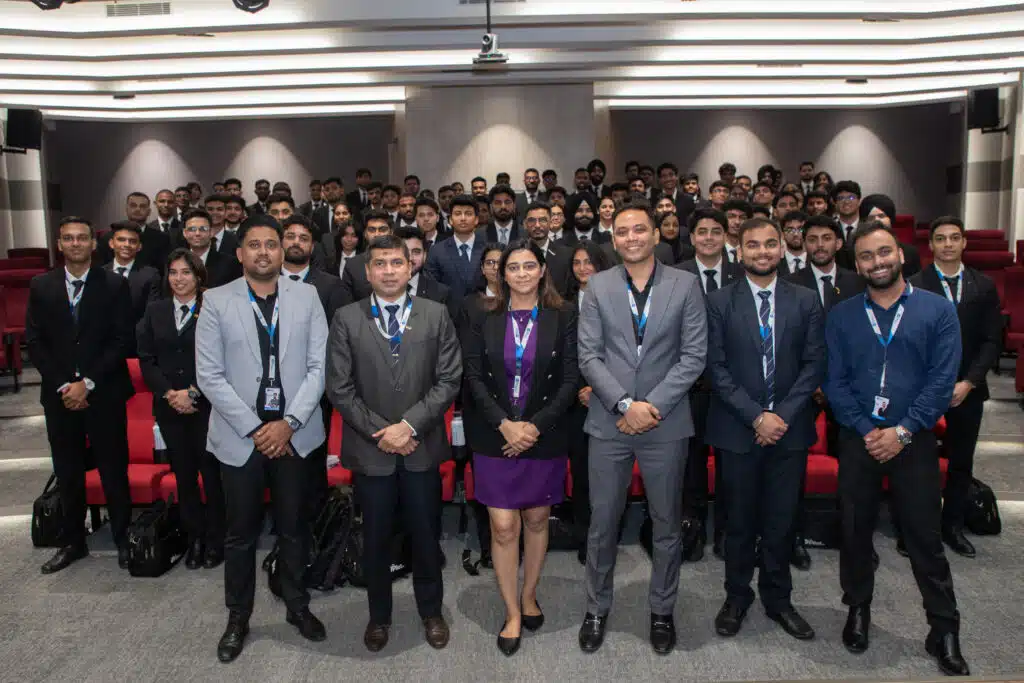
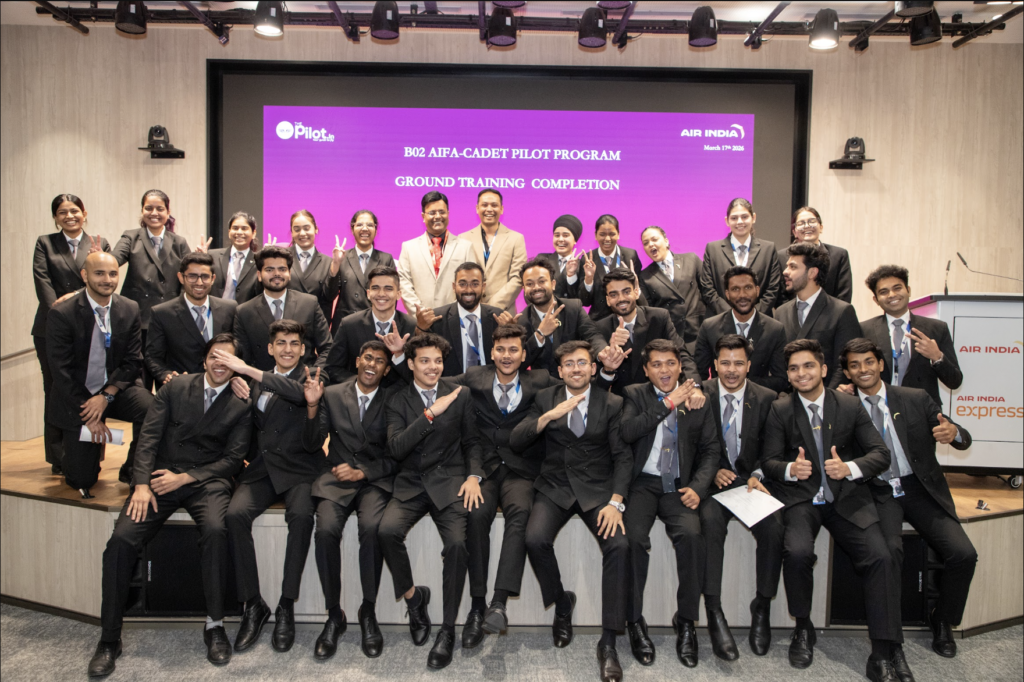
The India phase comes first, and it’s where preparation pays off. You’ll complete your DGCA ground school and appear for DGCA examinations in Air Navigation, Meteorology, Air Regulations, and Technical subjects. As the official ground training partner for the Air India Cadet Pilot Program, ThePilot.in conducts the DGCA ground classes at the Air India Academy in Gurugram, providing structured, instructor-led training aligned with the DGCA syllabus. Cadets who build a strong theoretical foundation early typically clear their papers more efficiently, helping them stay on track with their overall training timeline.
The US phase is the longest part of the program. Phoenix and Sanford were selected for their favourable flying weather, with Arizona offering more than 350 flyable days each year. Consistent flying conditions reduce weather-related interruptions, allowing students to progress through their flight training more efficiently than in regions where frequent weather delays can extend training timelines.
Training duration varies based on individual progress, aircraft availability, weather, and examination outcomes. Air India also presents the program timeline as an estimate rather than a fixed commitment. As a practical expectation, plan for approximately 24 months, while understanding that some students may take closer to 27 months to complete the entire program.
Where you’ll train: AIFA Amravati and the US partners
Air India is the first Indian airline to build its own flying school. The Air India Flying Academy (AIFA) at Belora airport in Amravati, Maharashtra sits on a 10-acre residential campus and is designed to graduate 180 commercial pilots every year, according to Air India’s official announcement. The academy has ordered 34 trainer aircraft, 31 single-engine and 3 twin-engine, and was slated to begin operations by early 2026 pending its DGCA licence.
What does that mean for you? In the near term, flight training for the Air India Cadet Pilot Program continues at the two US partner schools. As AIFA scales up, a growing share of cadets should train at Amravati itself, which would trim visa hassles and currency exposure from the equation. If you’re applying in 2026, ask at selection which school your batch would be allotted, and whether an India-based option is on the table for your intake.
Type ratings and advanced training happen at Air India-affiliated training organisations, including the airline’s simulator facilities in Gurugram, which are expanding alongside the fleet.
How to apply: the selection process step by step
Selection runs in four official stages. Here’s the full sequence as you’ll experience it.
- Confirm your eligibility and gather documents. Class 10 and 12 marksheets, ID proof, and passport. Fix any subject-wise percentage gaps through NIOS before applying.
- Apply online. Submit the application on Air India’s cadet pilot portal. There’s no walk-in route; everything starts here.
- Clear the technical evaluation. A computer-based assessment covering numerical reasoning, critical thinking, spatial awareness, and hand-eye coordination through motor-skills tasks. Pilot aptitude tests of this style reward practice, so drill sample tests beforehand.
- Clear the non-technical evaluation. Group exercises and a panel interview. Assessors watch how you communicate, handle pressure, and work in a crew. Rehearse structured answers about motivation and teamwork, but don’t script yourself into sounding robotic.
- Accept your offer and enrolment terms. Successful candidates receive the program offer along with the fee structure and payment plan. Review the inclusions line by line before signing.
- Complete your DGCA Class 1 medical and Computer Number. Both must be in place before training starts. Book the medical early; examiner slots in metro cities fill up weeks ahead.
- Begin ground school. Your batch starts DGCA theory in India, and the 24-month clock starts running.
If you clear some stages but stumble at one, the three-month cooling-off rule lets you reapply. Many successful cadets across airline programs got in on the second attempt.
Air India cadet program vs conventional CPL: which route fits you?
The cadet route isn’t automatically better. It trades money for certainty. Here’s the comparison that actually matters when you’re choosing.
| Factor | Air India cadet program | Conventional CPL route |
|---|---|---|
| Cost | Roughly ₹90 lakh–1.2 crore including type rating | ₹55–75 lakh for CPL; type rating (₹25–35 lakh) usually only after selection |
| Airline link | Selected by Air India before training begins | You compete for airline slots after CPL |
| Selection risk | Front-loaded: tough entry, clearer path after | Back-loaded: easier entry, uncertain placement |
| Timeline to airline cockpit | Around 24 months | 24–48 months, depending on hiring cycles |
| Flexibility | Committed to one airline’s pathway | Free to apply to IndiGo, Akasa, Spicejet or fly abroad |
| Who it suits | Candidates with financing sorted who want a defined path | Candidates optimising cost, or unsure which airline they want |
The conventional route through a DGCA-approved flying school, such as our in-India CPL program, typically requires a lower upfront investment. The key difference is that you’ll complete your Commercial Pilot Licence first and then apply to airlines independently, rather than training through an airline-sponsored cadet pathway.
One important point to remember is that an airline-linked cadet program is not the same as an unconditional job guarantee. Progression through the program depends on successfully clearing every stage of training, including DGCA examinations, flight training, assessments, the type rating, and the airline’s evaluation requirements. As with any cadet program, meeting all prescribed standards is essential before joining the airline as a First Officer.
What happens after the program: induction and career path
Finish the type rating and you move into Air India’s induction pipeline as a trainee First Officer. That starts with airline-specific ground training, simulator checks on your assigned fleet, and then supervised line flying with training captains on scheduled routes. Only after your final line check do you fly as a regular First Officer.
Fleet assignment matters more than most cadets realise. Air India operates the Airbus A320 family on domestic and short-haul routes alongside Boeing wide-bodies on international sectors, and the group’s fleet plan is still absorbing that 570-aircraft order. Cadets are typically assigned where the airline needs crews, not where they’d prefer to fly. Go in flexible.
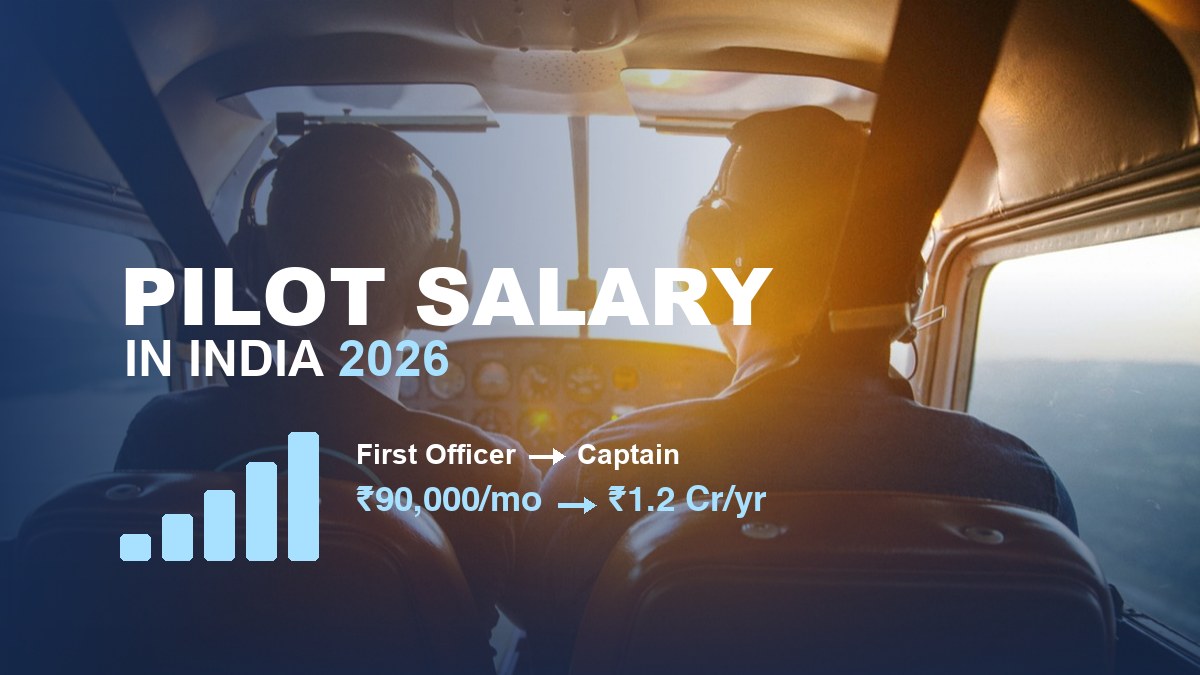
On pay, be careful with numbers you read online. First Officer salaries in India vary by airline, fleet, and flying hours, and they change with industry cycles. Entry-level First Officers at major Indian carriers typically earn in the low lakhs per month, with a sharp jump at command upgrade to Captain, which usually takes five years or more of line experience. Ask current line pilots or your counsellor for realistic current figures rather than trusting a three-year-old forum post.
The longer arc is the real payoff. A cadet who joins at 21 can realistically be a wide-body Captain in their thirties, and India’s pilot shortage means experienced crews will stay in demand for decades.
Frequently asked questions
Q: How much does the Air India Cadet Pilot Program cost? A: Air India shares the exact fee after selection, before training begins. Realistically, budget around ₹90 lakh to ₹1.2 crore end-to-end, covering CPL training in the US, living costs, DGCA conversion, and the type rating. Payments are made in instalments tied to training milestones, and Air India has loan tie-ups with financial institutions for selected cadets.
Q: What is the eligibility for the Air India Cadet Pilot Program? A: You need to be 18 to 30 years old, an Indian citizen or OCI holder, at least 158 cm tall, with 60% in 10+2 and 60% each in English, Maths, and Physics. You must clear a DGCA Class 1 medical before flying starts. No prior flying experience is needed, and Commerce or Arts students can qualify via NIOS.
Q: Does the Air India Cadet Pilot Program guarantee a job? A: Not unconditionally. The program is a defined pathway to a First Officer position at Air India, but induction depends on clearing every training phase, the type rating, and the airline’s assessments. It’s far stronger than finishing a standalone CPL and applying cold, yet no Indian airline issues an unconditional job guarantee at enrolment.
Q: How long does the Air India Cadet Pilot Program take? A: Around 24 months from ground school to type rating completion, per Air India’s official course details. That covers 4–6 months of DGCA theory in India, 12–15 months of flight training in the US, licence conversion on return, and the type rating. Individual timelines vary with exam attempts, weather, and aircraft availability.
Q: Can Commerce or Arts students join the Air India Cadet Pilot Program? A: Yes. If you didn’t take Maths and Physics in class 12, you can complete both subjects through the National Institute of Open Schooling (NIOS) and become eligible, provided you score 60% or above. This route typically adds six months to a year, so start the NIOS process as early as possible.
Final thoughts
The Air India Cadet Pilot Program is one of the most structured routes into an airline cockpit in India today: selection first, a defined 24-month pathway, and a type rating aligned to one of the fastest-growing fleets in the world. The catch is the price tag and the front-loaded selection. Walk in prepared or don’t walk in yet.
That preparation, the aptitude tests, the group exercises, the interview, the DGCA theory, is exactly where most applicants fall short, and exactly where coaching moves the needle. If Air India is your target for 2026, apply for cadet selection prep with our team and go into assessment day ready. Your guide to fly.