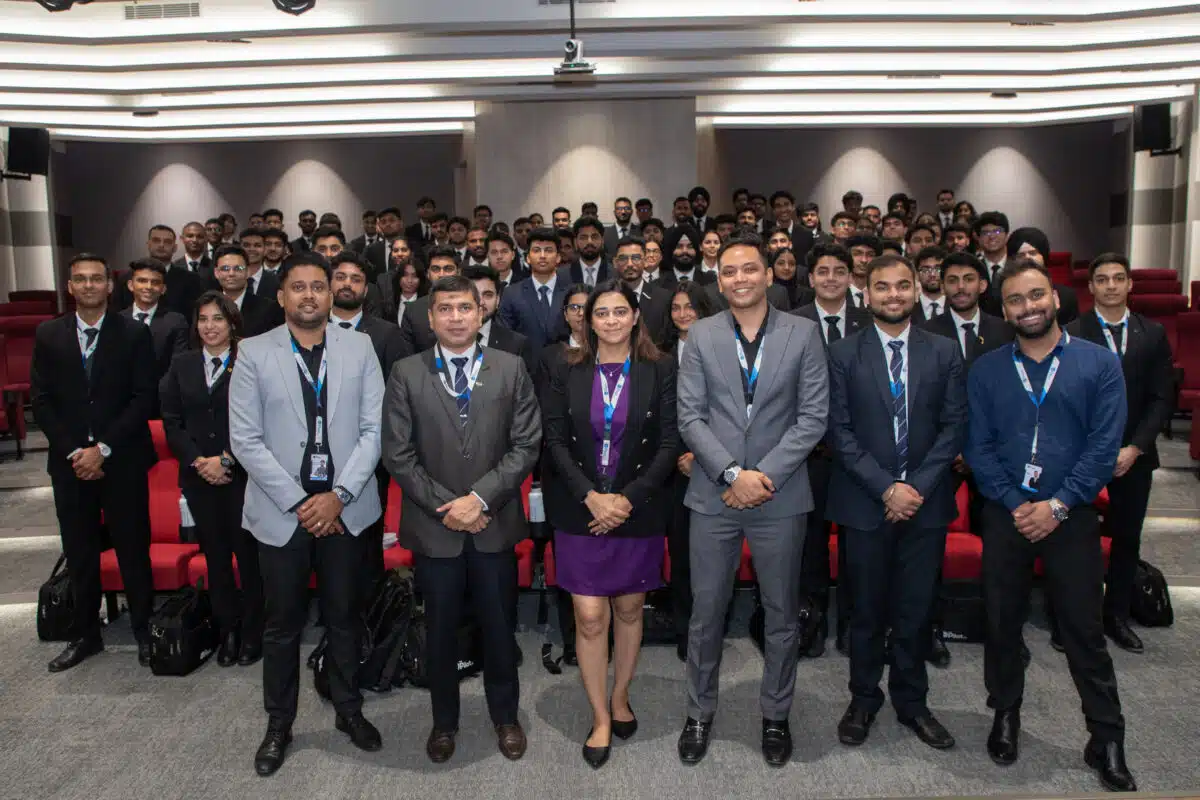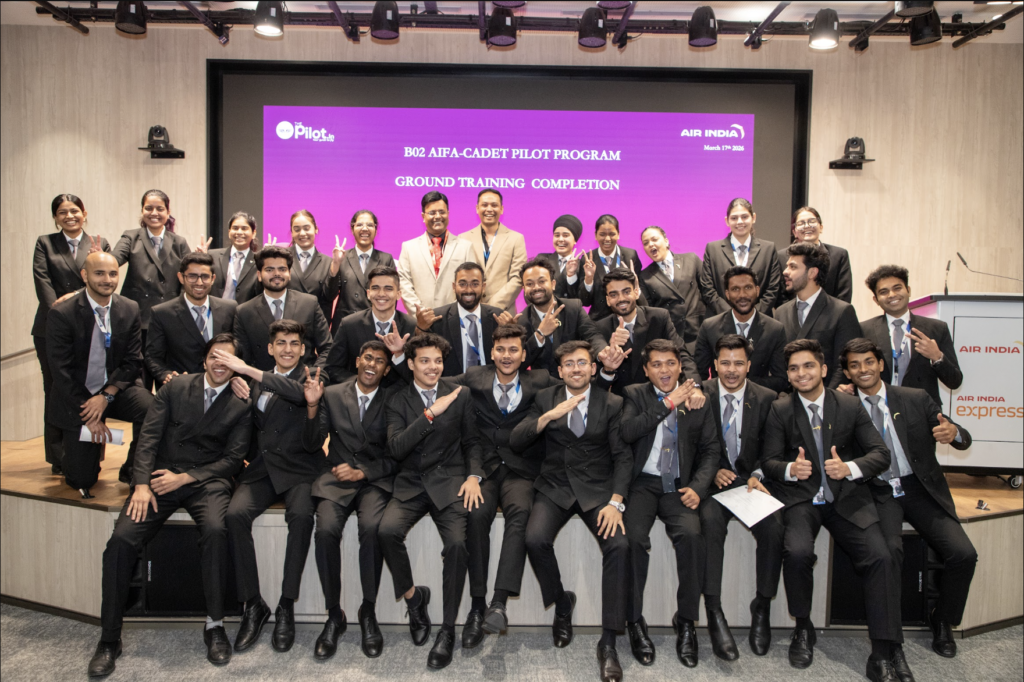
A cadet pilot program is the closest thing Indian aviation has to a straight line from class 12 to an airline flight deck. Three carriers now run one: Akasa Air, IndiGo and Air India. They differ on fees, age limits, aircraft type and how hard they are to get into, and those differences matter more than most students realise. This guide compares all three on the numbers that decide your next four years.
What a cadet pilot program actually is
A cadet pilot program is a training pathway designed by an airline rather than assembled by you. You enter with no flying experience. You leave with a Commercial Pilot Licence, a type rating on the airline’s aircraft, and in most cases a first officer seat with that airline.
The alternative is a self-sponsored CPL, where you choose your own ground school, your own flying school and your own type rating provider. That route gives you freedom. A cadet program gives you a syllabus the airline has already approved and a much shorter gap between licence issue and first salary.
Be clear about one thing before you go further. In India, a cadet pilot program is not sponsored in the financial sense. You still pay, usually through an education loan. What the airline gives you is structure, a defined training partner, and a line of sight to a job. That’s worth a lot, but it isn’t free money.
Cadet pilot programs in India at a glance
| Akasa SkyCadet | IndiGo Cadet | Air India Cadet | |
|---|---|---|---|
| Aircraft you’d fly | Boeing 737 MAX | Airbus A320 family | Airbus and Boeing mix |
| Age | 18 to 40 (40 at enrolment) | 18 to 40 | 18 to 30 |
| Class 12 marks needed | Pass with PCM and English | PCM and English; partner academies set their own cut-offs | 60% overall and 60% in each of Physics, Maths, English |
| Main training base | Partner FTOs in Maharashtra and Gujarat | Network of partner academies in India and overseas | AIFA Amravati & US partner schools |
| Published fee | Approx. INR 97 Lakhs | Varies by partner academy | Approx. INR 1.25 Cr |
| Programme age | Launched June 2026 | Long established, nine-plus partners | Established, expanding |
| Best for | A Boeing path and a small cohort | Choice of academy and frequent intakes | Full-service carrier and wide-body ambitions |
Akasa SkyCadet: the newest cadet pilot program
The Akasa Air cadet pilot program launched on 14 June 2026 under the name Akasa SkyCadet. It runs in three phases: DGCA ground school, CPL flight training, and a type rating on the Boeing 737 MAX, which is the only aircraft type Akasa flies. Training happens at DGCA-approved partner flight training organisations, currently Skynex Aero in Jalgaon and Dunes Aviation Academy in Bhavnagar.
Two things make SkyCadet interesting. First, the upper age limit of 40 at enrolment puts it alongside IndiGo and a full decade ahead of Air India, so career switchers in their thirties have a real route in. Second, the intake is small and the programme is new, which means fewer applicants have heard about it than about the bigger schemes. Being early to a new programme is an advantage worth using.
The official SkyCadet page shares the fee structure inside the application form instead of publishing it upfront, so the reliable number only reaches you once you apply. Cross-check anything you read elsewhere against that. Akasa also keeps hiring CPL holders and type-rated pilots through its regular recruitment alongside SkyCadet, so ask about placement terms when your offer letter arrives and you’ll know exactly where you stand.
The first application window opened with the launch and closed on 24 June 2026. If you missed it, the sensible move is to get medically cleared and start ground school now so you’re ready the moment the next one opens.
IndiGo cadet pilot programme: the largest network
IndiGo runs the biggest cadet pilot program in India, and it works differently from the other two. Rather than a single training base, IndiGo has built a network of partner academies. Its careers page currently lists Flight Training Adelaide, Skyborne Airline Academy, 43 Air, Chimes Aviation Academy, NZAA and Marigold Aviation, and the airline has said the programme runs to nine partnerships and counting.
That structure gives you choice, and it also means the timeline and fee depend on which academy you’re placed with. The Marigold route, for example, runs 21 months: 15 months of ground school, DGCA exams and CPL multi-engine instrument rating training, 4 months of foreign licence conversion, then 2 months for the A320 type rating. Academies that train entirely in India skip the conversion phase and finish sooner.
Eligibility is straightforward: Indian national, aged 18 to 40, and a 10+2 with Physics, Maths and English, though individual partner academies set their own minimum marks. Every route ends the same way, with a DGCA-issued CPL carrying an A320 endorsement. Fees vary by partner and by whether your flying happens in India or abroad, so ask each academy for a written all-in figure rather than working from a single headline number. Our full IndiGo cadet pilot program page covers the partner options in detail.
Air India cadet pilot program: the full-service route
Air India’s cadet pilot program is built around the Air India Flying Academy at Amravati in Maharashtra, a residential campus with a fleet of 34 trainer aircraft and three flight training devices. Some cadets are routed to US partner schools, AeroGuard Flight Training Center and Acron Aviation Academy, for the flying phase.
Selection runs in four stages: online application, a technical evaluation covering critical thinking, numerical reasoning, motor skills and spatial awareness, a non-technical evaluation with group exercises and panel interviews, then programme entry. Candidates who don’t make it face a three-month cooling period before reapplying, so don’t treat your first attempt as a practice run.
Entry requirements are the strictest of the three. You need 60% overall at 10+2 and 60% in each of English, Maths and Physics, and the age band closes at 30. The official Air India cadet portal does not publish a headline fee. The upside is scale of opportunity: Air India flies both narrow-body and wide-body fleets, so the long-term career ceiling is higher. We break the process down further in our Air India cadet pilot program guide.
Cadet pilot program fees compared
None of the three airlines publishes a single headline fee. IndiGo’s varies by partner academy, Akasa shares its structure inside the application form, and Air India discloses during the process. So the useful exercise is to price the same journey at Indian market rates and use that as your sanity check when a figure finally lands in front of you.
| Cost head | Typical range in India | Notes |
|---|---|---|
| Ground school and DGCA exam fees | ₹2.5–3 lakh | Online costs less than classroom |
| 200 hours of flying | ₹60–70lakh | The single biggest line item |
| Medicals, licence fees, RTR(A) | ₹1–2 lakh | Spread across the programme |
| CPL all-in | ₹70–75 lakh | Before type rating |
| Type rating (A320 or B737) | ₹15–20 lakh | Simulator and skill test |
| Full journey to an airline seat | ₹80–95 lakh | Excluding living costs |
Most families fund this with a secured education loan against property. Banks are generally more comfortable lending against a named airline cadet pilot program than against an unaffiliated flying school, which is one of the quieter advantages of this route. Start the loan conversation months before you apply, because sanction letters take longer than anyone expects.
Eligibility: who qualifies for which programme
| Criterion | Akasa | IndiGo | Air India |
|---|---|---|---|
| Nationality | Indian citizen | Indian national or OCI | Indian citizen or OCI |
| Age | 18 to 40 at enrolment | 18 to 40 | 18 to 30 |
| Class 12 subjects | Physics, Maths, English | Physics, Maths, English; marks set by partner academy | Physics, Maths, English at 60% each |
| Medical | DGCA medical fitness | DGCA Class 1 before flight training | Class 1 before flight training |
| Licence on completion | CPL plus B737 MAX type rating | DGCA CPL with A320 endorsement | CPL plus type rating |
| Reapplication | Not specified | Next batch window | After a 3-month cooling period |
If Physics or Maths is missing from your class 12, all three doors are closed until you clear those subjects through NIOS. That takes a few months, so register this term rather than next. And book your DGCA Class 2 medical before you spend money on anything else. Discovering a colour vision problem after paying a ground school fee is an expensive way to learn you were never eligible.
One more update worth knowing: since November 2025, the RTR(A) radio telephony exam is conducted by the DGCA rather than WPC. Older guides still tell you to register with WPC. They’re wrong.
How to apply for a cadet pilot program, step by step
- Clear your Class 2 medical. Do this first, always. It decides whether the rest of the plan is worth making.
- Fix any class 12 gaps. Register with NIOS for Physics or Maths if either is missing.
- Track the windows. Airlines announce intakes on their own careers portals. Applications are always free, and anyone charging to “secure your seat” is selling you nothing.
- Prepare your documents. Marksheets, ID proof, passport and photographs scanned and ready. Windows can close in days.
- Submit and sit the aptitude assessment. Reasoning, spatial awareness, numerical speed and psychometric profiling.
- Clear the interview and group stage. Assessors are judging temperament and communication as much as technical interest.
- Complete document verification and the Class 1 medical.
- Arrange funding and join ground school. Structured DGCA ground classes lift first-attempt pass rates noticeably.
What the selection assessment tests
Most candidates who miss out don’t fail on knowledge. They fail the aptitude stage because nobody told them what it looks like. Indian airline cadet assessments draw from the same pool of tests, so preparing for one prepares you for all three.
- Numerical reasoning. Speed matters more than difficulty. Fuel, time and distance sums against a clock.
- Spatial orientation. Reading attitude indicators, rotating shapes mentally, holding a heading in your head.
- Abstract and verbal reasoning. Pattern completion and comprehension, usually multiple choice.
- Psychomotor tasks. Tracking a target with a joystick while answering audio prompts, testing how you split attention.
- Psychometric profiling. Personality questions with no right answer. Answer honestly and consistently, because the test flags contradictions.
- Group exercise and interview. Assessors watch how you handle disagreement and whether you can explain a decision calmly.
Give yourself four to six weeks of practice rather than four to six days. Twenty minutes a day of timed drills beats a weekend of cramming. And be ready to explain why aviation in specific language, because assessors have heard “flying has been my dream since childhood” several thousand times.
What Indian airline pilots earn
Indian carriers rarely publish pay scales, so treat every figure here as a market estimate. A newly type-rated first officer at a low-cost carrier typically starts somewhere around ₹1.5–2.5 lakh a month once flying allowances are counted. Akasa Air pilot salary levels sit broadly in line with the rest of the narrow-body market. Pay climbs with hours, and a narrow-body commander can typically reach ₹6–9 lakh a month.
Set that against a ₹75–95 lakh training bill and you’ll see why most cadets budget five to eight years to clear their loan comfortably. Our stage-by-stage breakdown of pilot salary in India has the full picture.
Why the hiring math is on your side
Airlines didn’t just build these programmes. They built them because India is short of pilots and the shortfall is widening.
- Indian carriers have roughly 1,700 aircraft on order between them.
- The commercial fleet is projected to nearly triple by 2035.
- India currently has an estimated 12,000 to 15,000 commercial pilots.
- Meeting the 2035 fleet plan would need around 35,000 pilots.
- Across India and South Asia, roughly 45,000 new pilots are expected to be needed over the next two decades.
Belson Coutinho, Akasa’s co-founder and COO, framed the SkyCadet launch around exactly this: an industry entering a long growth phase that needs a workforce built ahead of it. For a 17-year-old choosing a path after class 12, that hiring curve matters more than any brochure.
Cadet pilot program or self-sponsored CPL?
| A cadet programme suits you if… | A self-sponsored CPL suits you if… |
|---|---|
| You want one defined pathway with no decisions to second-guess | You want to pick your own school, country and timeline |
| An airline-linked route helps your loan application | Funding is already arranged |
| You’re comfortable committing to one aircraft type early | You want to keep Airbus and Boeing options open |
| You test well under pressure | You’d rather not be filtered out by an aptitude test |
| You can start when the airline’s window opens | You need to begin on your own schedule |
Plenty of Indian pilots have flown successful careers on both routes. The wrong choice is the one made without reading the fine print. If you go the self-sponsored way, you’ll pay for your A320 type rating or Boeing 737 type rating separately once you have an airline offer.
Frequently asked questions
What is a cadet pilot program?
It’s an airline-designed training pathway that takes candidates with no flying experience through ground school, a Commercial Pilot Licence, and a type rating on the airline’s aircraft, usually ending with a first officer position. In India, Akasa Air, IndiGo and Air India run one each. Cadets fund the training themselves, typically through a secured education loan.
Which cadet pilot program in India is the cheapest?
None of the three publishes a single headline fee, so there’s no clean answer. IndiGo’s cost depends on which partner academy you’re placed with and whether flying happens in India or overseas. Akasa and Air India disclose during the application process. As a benchmark, the same journey at Indian market rates costs around ₹75–95 lakh.
What is the age limit for cadet pilot programs?
IndiGo and Akasa both accept applicants up to 40, with Akasa measuring that at enrolment rather than application. Air India’s band is tighter at 18 to 30. If you’re past 30 and switching careers, IndiGo and Akasa are the two doors still open to you, which is worth knowing before you spend time on an application that can’t succeed.
Does a cadet pilot program guarantee a job?
None of the three publishes an unconditional guarantee. The programmes are built around each airline’s own fleet and hiring plans, which makes them a strong pathway, but all three also recruit CPL holders and type-rated pilots through normal channels. Always read the offer terms before paying anything.
How long does a cadet pilot program take?
Budget two to three years. One IndiGo partner route runs 21 months: 15 months for ground school and CPL, 4 months for foreign licence conversion, 2 months for the A320 type rating. Routes trained entirely in India skip the conversion phase. Akasa hasn’t published a duration. Repeat exam attempts and monsoon flying delays stretch timelines most.
Can I apply to more than one cadet programme?
Yes, and you should. The windows rarely overlap, the assessments test similar skills, and there’s no rule against holding applications with several airlines. The one restriction to note is Air India’s three-month cooling period before you can reapply to that programme after an unsuccessful attempt.
Final thoughts
Choosing a cadet pilot program comes down to three honest questions: how old you are, what your class 12 marks look like, and how much certainty you need on cost before you commit. Akasa and IndiGo both stay open to you until 40. IndiGo gives you the widest choice of training academy. Air India offers the longest career runway on the biggest fleet. None of them rewards a candidate who starts preparing after the window opens.
Not sure which route fits your marks, your age and your budget? Talk to our counsellors at ThePilot.in and we’ll map the pathway, the timeline and the funding honestly, with no sales pitch. Your guide to fly.