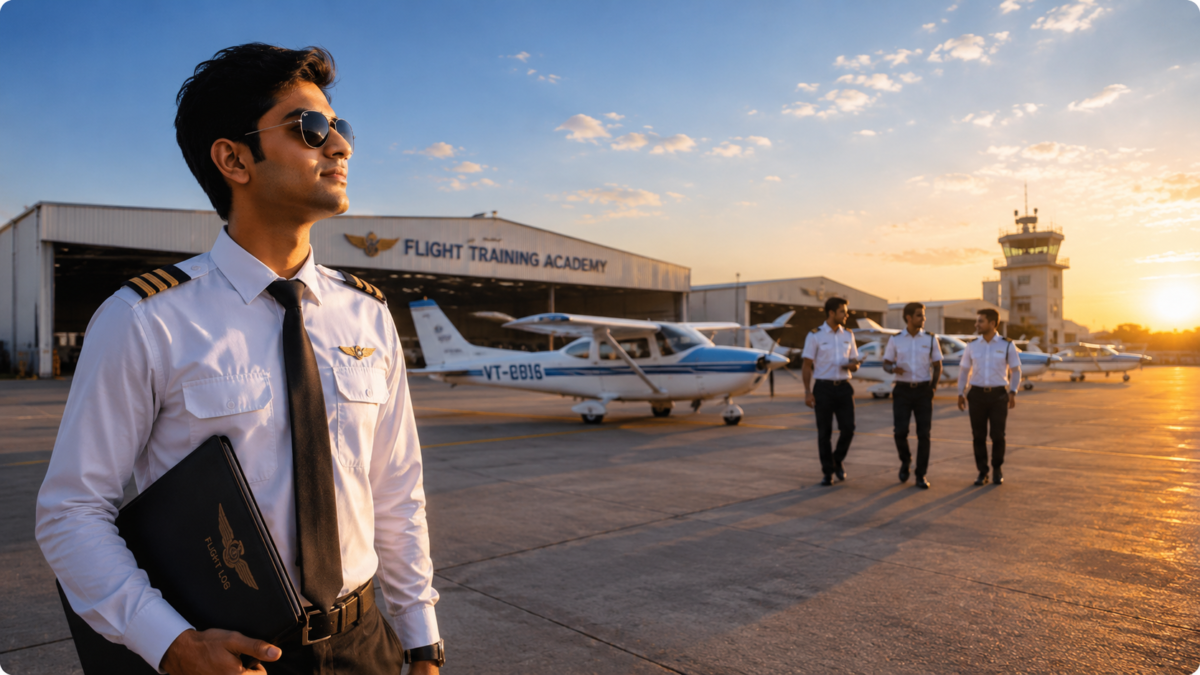
Pilot training in India just got its biggest push in years. On 5 August 2026, Civil Aviation Minister Shri Kinjarapu Rammohan Naidu handed over Letters of Intent (LoIs) to 11 new Flying Training Organisations (FTOs) that will operate from seven Airports Authority of India (AAI) airports. Once these schools are up and running, India’s training capacity is expected to grow by around 750 cadet seats every year. If you’re planning a commercial pilot career, this announcement changes a few things for you, and mostly for the better. Here’s what was announced, why it matters, and how to use it.
What exactly was announced on 5 August 2026
At a ceremony in New Delhi, the Ministry of Civil Aviation awarded LoIs to 11 new FTOs. A Letter of Intent is the step before final approval. It tells the selected operators they’ve won the right to set up flying schools at specific AAI airports, subject to meeting DGCA requirements and completing formalities like land agreements and aircraft induction. The seven host airports haven’t been publicly listed yet, so keep an eye on AAI and ministry updates for the exact locations.
The minister also launched an FTO IFR Slot Booking App, which should make it easier for flying schools to book instrument flying slots at AAI airports. Instrument training slots are a quiet bottleneck at busy fields, so this is a practical fix rather than a headline-grabber.
Here are the key numbers from the announcement at a glance:
| Metric | Status |
|---|---|
| New FTOs awarded LoIs | 11, across 7 AAI airports |
| Extra training capacity | Around 750 cadets per year |
| Existing FTOs in India | 41, operating from 63 flying bases |
| Training aircraft fleet | Up from 324 to 385 in about two years |
| Annual flying hours | Up roughly 25% |
| CPLs issued | 1,347 in 2024 → 1,652 in 2025 (decade high) |
What is a Flying Training Organisation (FTO)?
An FTO is a flying school approved by the DGCA, India’s civil aviation regulator, to train pilots for licences such as the Private Pilot Licence (PPL) and the Commercial Pilot Licence (CPL). This is where you build your 200 hours of flying, learn on trainer aircraft like the Cessna 172 or Diamond DA40, and get signed off by DGCA-approved instructors and examiners.
India currently has 41 approved FTOs spread across 63 flying bases. That sounds like plenty until you look at demand. Seats at the well-run schools fill up fast, waiting lists stretch for months, and many cadets end up flying abroad simply because they couldn’t get a slot at home. Roughly 30 to 40 percent of Indian CPL holders have typically done some or all of their flying overseas for exactly this reason. The 11 new FTOs are aimed squarely at that gap. If you want to understand where flying school fits in the full journey, our guide on how to become a pilot in India walks through every stage.
Why India is expanding pilot training capacity now
The short answer: aircraft orders. Indian airlines have around 1,640 aircraft on order, and close to 500 of those are expected to arrive within the next five years. Every new aircraft needs a set of crews. Depending on the aircraft type and route network, airlines typically plan for 10 to 12 pilots per aircraft. Multiply that out and India needs thousands of new pilots this decade.
The supply side has been catching up. CPL issuance rose from 1,347 in 2024 to 1,652 in 2025, the highest in ten years. The training aircraft fleet grew from 324 to 385 in about two years, and annual flying hours are up around 25%. IGRUA, the government’s flagship academy, reportedly crossed 1,765 flying hours per aircraft in a year, which is well above the global benchmark of roughly 1,500 hours.
Behind these numbers sits a policy shift the minister summed up as “Train in India, Fly in India.” The idea is to build India into a complete training destination in its own right, so a cadet who wants to do their aviation pilot training in India can finish it end to end at home. Training in the US, New Zealand or South Africa remains a well-established route, and plenty of excellent pilots have come through it. The expansion simply means choosing India is now a matter of preference, not a lack of seats.
The policy push behind the 11 new FTOs
The LoI ceremony is the visible part of a longer clean-up of how pilot training in India is regulated and priced. A few of the reforms are worth knowing about, because they directly affect what your training will cost and how smoothly it runs.
Airport royalty abolished. FTOs at AAI airports earlier paid royalty charges that got passed straight into your fees. Scrapping them lowered the cost of operating a flying school, which is one reason bidding for these new slots attracted serious operators.
Digital DGCA exams and e-licences. CPL theory exams now run on a digital platform with more frequent sittings, and licences are issued electronically. Waiting weeks for a physical licence to arrive by post used to delay job applications; that step is gone.
RTR(A) moved to DGCA. Since November 2025, the radio telephony exam, long conducted separately by the WPC wing of the telecom department, is conducted by the DGCA itself under the new 2025 rules. You register with the same DGCA Computer Number you use for theory papers, and the practical is scenario-based. One regulator, one login, one less queue.
The FTO Ranking Framework. The DGCA now grades flying schools, and the effect is showing: the number of Category C (lower-rated) FTOs has fallen while Category B schools have grown. As a cadet, you can use these rankings to shortlist the best institute for pilot training in India rather than relying on brochures and hearsay.
Indigenous trainer aircraft. The HANSA-3 trainer, developed in India, is moving towards wider production. If it scales, flying schools get a cheaper, locally supported aircraft, which over time can soften the fees for pilot training in India.
What the new FTOs mean for your pilot training in India
Announcements are nice. What actually changes for you as an aspiring pilot? Four things, over the next couple of years.
Shorter waiting lists. An extra 750 seats a year is close to a 20 percent jump on current CPL output. As the new schools come online, admission queues at existing FTOs should ease, and you’ll have more genuine choices instead of taking whichever school has a seat.
Faster course completion. Delays in Indian flying training usually come from aircraft availability, weather, and airport slot congestion. More schools spread across more airports means less crowding per runway. The IFR slot booking app should help here too. A CPL that drags to 24 or 30 months costs you real money in rent and lost airline seniority, so this matters more than it sounds.
Competitive pricing, eventually. Flying training follows supply and demand like everything else. Today, completing your CPL in India typically costs around ₹60 to 75 lakh all-in, with the 200 hours of flying alone accounting for roughly ₹55 to 65 lakh. New capacity won’t halve that overnight. Over time, though, more schools competing for the same cadets tends to keep fee hikes in check and push schools to compete on quality, not scarcity. For a detailed breakdown of what you’ll pay at each stage, see our page on pilot training and flying schools in India.
Better quality control. The DGCA’s ranking framework now grades FTOs, and the minister was blunt that safety and instructor oversight must stay central as capacity grows. For you, the ranking is a useful shortlisting tool that simply didn’t exist a few years ago.
One more point for students finishing school this year: timing works in your favour. If you’re starting pilot training in India after 12th, your ground school and medicals will take the better part of a year anyway. By the time you’re ready for the flying phase, some of the new capacity should be online, which means shorter queues than the batch just ahead of you faced.
Training in India vs abroad: does this change the maths?
For years, the standard advice was that flying abroad was faster even if the total cost ended up similar after conversion. The expansion narrows that gap. Here’s an honest comparison as things stand in 2026:
| Factor | Training in India | Training abroad (US, SA, NZ) |
|---|---|---|
| Typical CPL cost | ₹60 to 75 lakh all-in | Broadly similar once you add living costs and licence conversion |
| Timeline | 18 to 24 months, improving as capacity grows | 12 to 18 months, weather dependent |
| Licence issued | DGCA CPL, airline-ready in India | Foreign CPL, needs DGCA conversion (extra exams, flying and time) |
| Weather and terrain | Indian conditions, monsoon experience airlines value | Often easier weather, less India-specific exposure |
| Support system | Family nearby, no visa hassles, fees in ₹ | Visa, forex swings, living alone abroad |
Conversion is the hidden cost people underestimate. A foreign CPL doesn’t let you fly for an Indian airline until you convert it, which means more DGCA papers, skill tests, and often extra flying hours in India. If you train here from day one, that entire step disappears. Add the new capacity, and the case for staying in India is the strongest it has been in a decade. It isn’t automatic, though. The right school still matters more than the flag on the airfield.
How to start your pilot training in India: step by step
Whether you join one of the new FTOs or an established one, the path to the cockpit stays the same. Here’s the sequence:
- Finish 10+2 with Physics and Maths. If you took commerce or arts, you can clear these two subjects through NIOS. You need to be at least 17 to start CPL training.
- Get your DGCA Class 2 medical, then Class 1. Do this before spending a rupee on training. The Class 1 medical at a DGCA-empanelled centre confirms you’re fit for a commercial licence.
- Create your DGCA Computer Number on eGCA. This ID tracks your exams and licence. Note that since November 2025, even the RTR(A) radio telephony exam is conducted by the DGCA using this same number, so one registration covers everything.
- Clear the DGCA ground exams. Air Navigation, Meteorology, Air Regulations, Technical General and Composite. Structured coaching shortens this phase a lot; our DGCA ground classes are built around exactly these papers.
- Choose your FTO and fly 200 hours. Shortlist DGCA-approved schools, compare fleet size, aircraft serviceability, instructor strength and the new DGCA ranking, then visit before you pay. This is where the 11 new FTOs will widen your options.
- Get your CPL, then plan the airline step. With CPL in hand, you’ll look at type rating (typically another ₹15 to 20 lakh) or a cadet programme. Airline first officer pay makes the investment worth understanding upfront; see our guide to pilot salary in India.
How to evaluate any FTO, old or new
New schools bring fresh aircraft and modern facilities, but they also start with zero track record. Whether you’re looking at an established academy or one of the incoming eleven, run every option through the same filter before you pay a registration fee.
- DGCA approval and ranking. Confirm the school appears on the DGCA’s approved FTO list, and check its category under the ranking framework. An LoI is not the same as a DGCA approval; the new schools will need full sign-off before they can train you.
- Fleet size versus batch size. A school with 4 aircraft and 60 cadets will keep you on the ground. Ask how many serviceable aircraft fly on an average day, not how many are parked in the hangar.
- Instructor strength and retention. Flying instructors get poached by airlines constantly. Ask how many full-time instructors the school has and how long the current team has been there.
- Real completion timelines. Ask recent graduates how long their CPL actually took, from joining to licence in hand. The gap between the promised 18 months and reality tells you most of what you need to know.
- Transparent fee structure. Get the full breakup in writing: flying hours, ground school, exam fees, uniform, accommodation. Surprise add-ons are the oldest trick in this industry.
Money deserves a plain word here too. Most cadets fund their pilot training in India through a mix of family savings and education loans, and banks generally lend more readily for DGCA-approved schools on Indian soil than for training abroad. Several public sector banks offer education loans for flying training against collateral, typically covering a large share of the fees. Factor the interest into your total budget from day one, because a ₹70 lakh loan serviced over the years before your first airline paycheque is part of the real cost of becoming a pilot.
Frequently asked questions
Which are the 11 new FTOs approved in India?
The ministry hasn’t published the individual operator names or the seven AAI airport locations yet. The LoIs were handed over on 5 August 2026, and final approvals will follow once each operator completes DGCA and airport formalities. We’ll update this post as the official list is released.
When will the new FTOs start training cadets?
No official timeline has been announced. Going by past FTO rollouts, expect roughly 12 to 24 months between the LoI and the first cadet flying, since operators need to import aircraft, hire instructors and clear DGCA inspections. Some airports with existing infrastructure may move faster.
How much does pilot training in India cost in 2026?
Plan for around ₹60 to 75 lakh for the full CPL, of which the 200 flying hours make up roughly ₹55 to 65 lakh. Add ₹15 to 20 lakh later for a type rating. The full journey from zero to airline-ready typically lands between ₹75 and 95 lakh.
Is there really a pilot shortage in India?
There’s strong long-term demand rather than an instant shortage. Indian carriers have about 1,640 aircraft on order, with nearly 500 arriving over five years, and each aircraft typically needs 10 to 12 pilots. India issued 1,652 CPLs in 2025, so hiring cycles will still have ups and downs, but the decade-long trend favours cadets.
Is it better to do pilot training in India or abroad now?
With 11 new FTOs coming up, costs in rupees, no visa risk and no licence conversion, pilot training in India makes sense for most cadets. Abroad can still be faster today. The gap should narrow as new capacity opens, so compare specific schools, not just countries.
Can I get an education loan for pilot training in India?
Yes. Several public sector and private banks offer education loans for CPL training at DGCA-approved FTOs, usually against collateral for amounts of this size. Lenders tend to be more comfortable with Indian schools than foreign ones. Compare interest rates, moratorium terms and margin money before you commit.
Final thoughts
The LoIs for 11 new FTOs won’t change your training overnight, but they signal where Indian aviation is headed: more seats, better-regulated schools, and a real push to keep cadets training at home. If you start your DGCA ground work now, the new capacity will be opening up right around the time you’re ready to fly. Cadets who plan early get first pick of seats when new schools open. Your guide to fly is more than our tagline; it’s the job description. Book a free counselling session with ThePilot.in and we’ll help you map your route from classroom to cockpit.